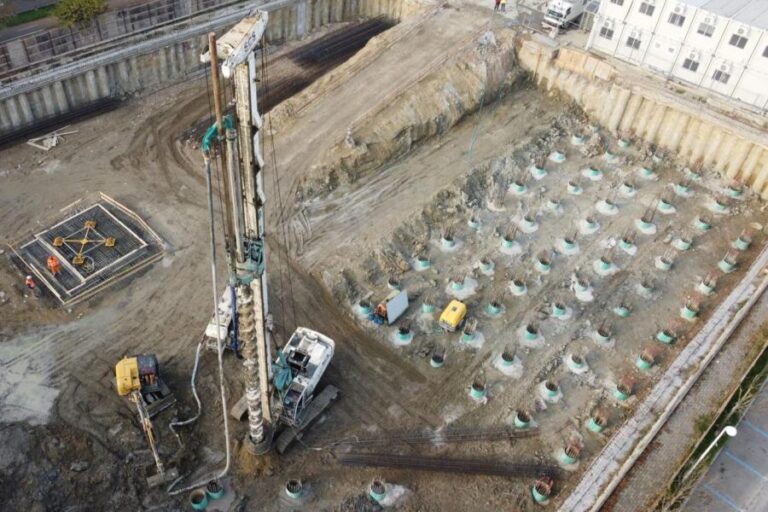

Full casing construction is a bored pile construction method in which a steel casing is installed through the full length of the pile during drilling. The casing provides continuous support to the surrounding ground while excavation takes place inside the casing.
Unlike conventional bored piling, where temporary casing may only be installed through unstable upper soil layers, the full casing method maintains casing support along the entire pile depth. This makes it particularly useful for projects involving loose soil, unstable formations, groundwater, collapsible layers, or mixed ground conditions.
The method requires careful coordination between the drilling rig, casing system, excavation tools, and casing installation equipment. Depending on project requirements and ground conditions, contractors may use a casing oscillator, casing rotator, rotary drilling rig, core barrel, drilling bucket, or other specialized tools.
This guide explains how full casing construction works, what equipment is required, where the method is commonly used, and what factors should be considered when selecting a full casing system.
What Is Full Casing Construction?
Full casing construction is a piling technique in which a steel casing is advanced progressively to the required pile depth while the soil or rock inside the casing is excavated.
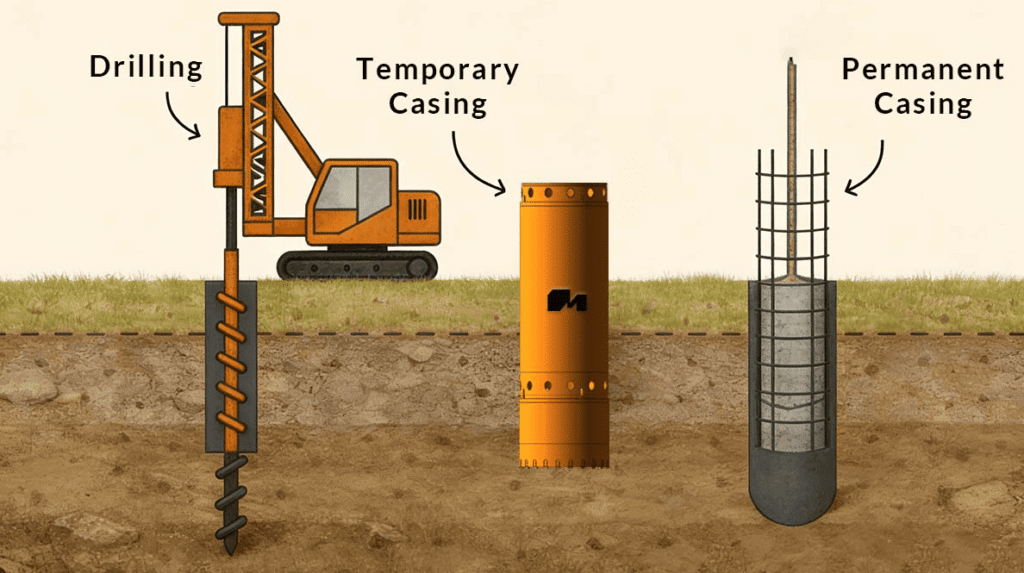
The casing acts as a temporary steel liner that supports the borehole wall throughout drilling. As the casing advances, drilling continues inside the protected section. Depending on the construction method and project specifications, the casing may remain in the ground as part of the permanent pile or be extracted after concrete placement.
The basic concept can be summarized as:
Casing installation → Internal excavation → Casing advancement → Cleaning → Reinforcement installation → Concrete placement → Casing extraction or retention
The exact sequence can vary depending on the equipment configuration, geological conditions, pile diameter, pile depth, and engineering requirements.
Full casing construction is particularly valuable when maintaining borehole stability is critical and conventional drilling methods may result in excessive ground collapse or loss of borehole integrity.
How Does Full Casing Construction Work?
The full casing method combines casing installation with excavation. The casing is not simply placed into a pre-drilled hole; instead, it is progressively installed as drilling proceeds.
1. Positioning the Drilling Rig
The rotary drilling rig is positioned accurately at the pile location. Verticality is checked before drilling begins because pile alignment can be difficult to correct once the casing has been advanced to significant depth.
The rig must have sufficient torque, crowd force, and hydraulic capacity for the selected casing and drilling tools.
2. Installing the Initial Casing
The first casing section is positioned at the pile location and installed into the ground.
A casing oscillator or casing rotator can apply torque and downward force to advance the casing. In some configurations, the drilling rig works together with the casing equipment to remove material from inside the casing.
The initial casing section provides stability for the upper part of the borehole and establishes the alignment of the pile.
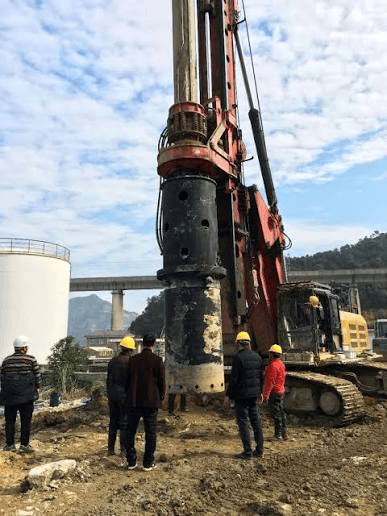
3. Excavating Inside the Casing
Once the casing has been installed, drilling proceeds inside the casing.
The selection of drilling tools depends heavily on the formation. Common tools include:
- Drilling buckets
- Augers
- Core barrels
- Rock buckets
- Roller-bit tools
- Specialized casing drilling tools
For soil formations, drilling buckets or augers may be suitable. When rock is encountered, core barrels, roller-bit tools, or heavy-duty rock drilling tools may be required.
4. Advancing Additional Casing Sections
As excavation progresses, additional casing sections are connected and advanced.
The casing must maintain contact with the surrounding ground closely enough to prevent excessive soil movement and borehole collapse.
For deep piles, multiple casing sections may be connected using mechanical or welded casing joints, depending on the system.
5. Continuing Excavation to the Required Depth
Drilling and casing advancement continue until the specified pile depth or bearing stratum is reached.
In difficult formations, casing advancement and excavation may need to proceed alternately. The drilling depth inside the casing and the casing penetration depth must be controlled carefully to maintain borehole stability.
6. Cleaning the Borehole
After reaching the required depth, loose material and drilling spoil are removed from the bottom of the borehole.
Proper cleaning is important because excessive sediment at the pile base can affect pile performance and concrete placement.
The cleaning method depends on the pile diameter, drilling tool, soil conditions, groundwater conditions, and project specifications.
7. Installing the Reinforcement Cage
Once the borehole has been prepared, the reinforcement cage is lowered into position.
The cage must be installed without damaging the casing or disturbing the borehole.
Adequate clearance between the reinforcement cage and casing is required to maintain the specified concrete cover.
8. Concrete Placement
Concrete is placed into the completed pile excavation.
When groundwater or slurry is present, a tremie pipe may be used to place concrete from the bottom upward while minimizing segregation and contamination.
The concrete placement sequence must be coordinated with casing extraction if temporary casing is being removed.
9. Casing Extraction or Retention
If the casing is temporary, it is gradually extracted while concrete is placed or maintained at an appropriate level inside the casing.
The extraction process requires careful control to avoid creating voids, necking, segregation, or other defects.
In applications where the casing forms part of the permanent pile system, the casing remains in place according to the project design.
Equipment Used in Full Casing Construction
The equipment configuration depends on the pile diameter, depth, geological conditions, and selected construction method.
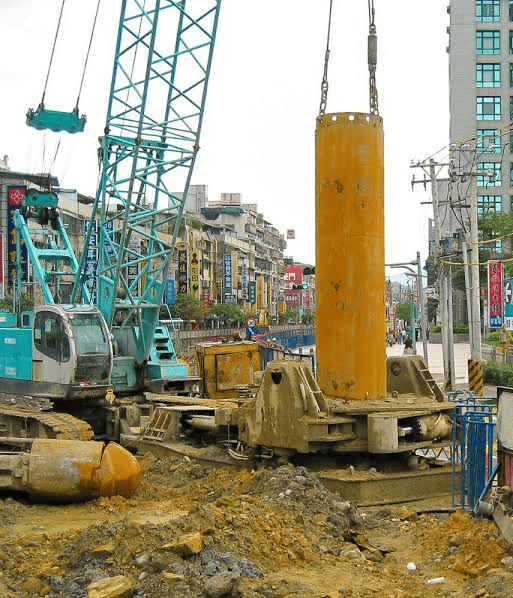
Casing Oscillator
A casing oscillator grips the casing and applies controlled rotational movement and vertical force.
It is commonly used where high casing penetration force is required, particularly in difficult ground conditions.
The oscillating movement helps break the resistance between the casing and surrounding soil while advancing the casing into the ground.
A casing oscillator can be particularly useful when conventional rotary drilling alone cannot provide sufficient casing penetration.
Casing Rotator
A casing rotator applies continuous or controlled rotary torque to the casing while also providing vertical force.
Compared with an oscillator, a casing rotator is designed around rotational casing advancement and can be integrated into specialized full casing construction systems.
Casing rotators are often selected for deep or large-diameter piling applications where precise casing control is required.
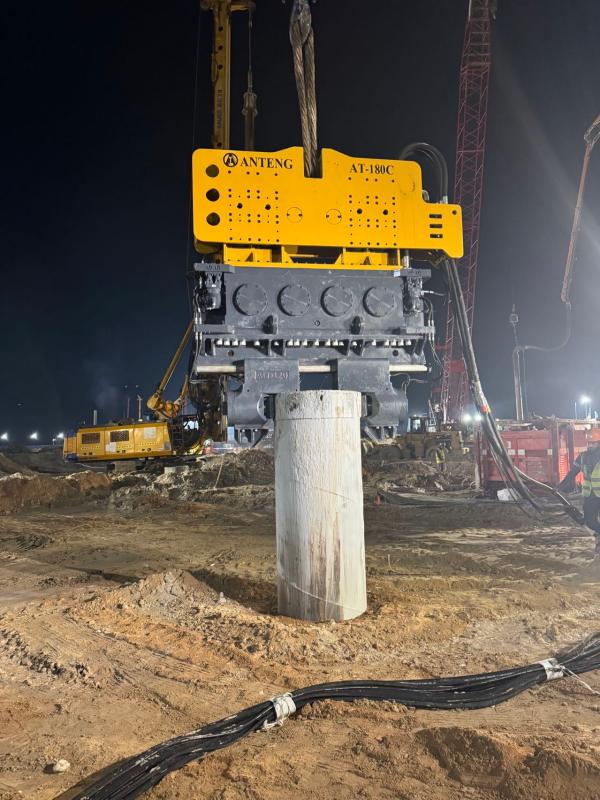
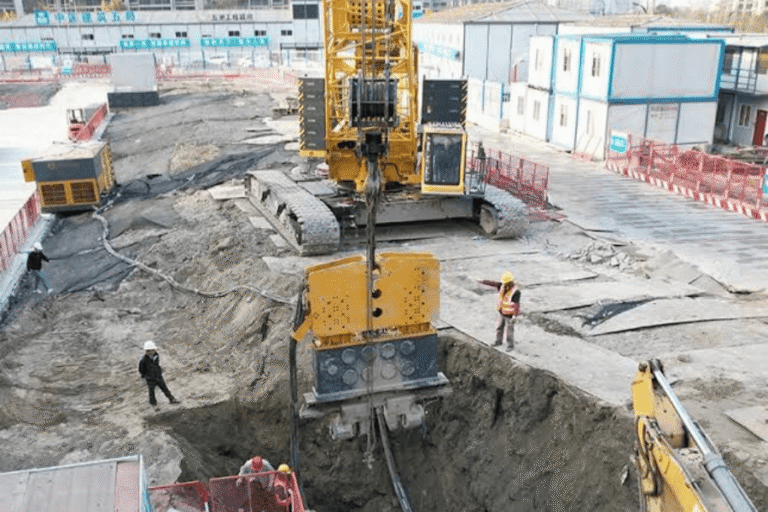
Vibro Hammer
A vibro hammer can also be used as part of a full casing construction system when the project requires rapid casing installation or extraction in suitable ground conditions. By applying high-frequency vertical vibration to the casing, a vibro hammer can help reduce soil resistance and facilitate casing penetration or removal.
Vibro hammers are particularly useful when working with temporary casing that must be installed and extracted efficiently. However, their suitability depends on factors such as soil conditions, casing diameter and weight, required penetration depth, surrounding structures, and allowable vibration levels. In sensitive urban or vibration-restricted projects, a casing oscillator or casing rotator may be more appropriate.
The vibro hammer should therefore be selected as part of the complete casing system rather than as an isolated piece of equipment. Proper matching of the hammer, casing, lifting equipment, and drilling rig is important for safe and efficient operation.
Rotary Drilling Rig
The rotary drilling rig performs the excavation inside the casing.
Important rig parameters include:
- Maximum drilling diameter
- Maximum drilling depth
- Rotary torque
- Crowd force
- Main winch capacity
- Kelly bar configuration
- Hydraulic system capacity
The drilling rig should be selected based on both the drilling tools and the casing system rather than considering drilling diameter alone.
Drilling Tools and Concrete Tremie pipe
Drilling buckets are widely used for excavating soil and relatively soft formations inside the casing, while different bucket configurations can be selected according to soil type, cutting system, and pile diameter. When rock is encountered, core barrels can be used to penetrate and recover hard formations, with configurations including bullet teeth, roller bits, or cross-cutting tools for different geological conditions. Hard and abrasive formations may also require specialized rock drilling tools, such as roller-bit tools for breaking hard formations or replaceable bullet teeth and other carbide-based cutting systems that provide high impact resistance and wear resistance. After excavation and borehole preparation, a tremie pipe is commonly used when concrete must be placed below groundwater or other fluids, helping maintain continuous concrete flow from the bottom of the pile upward while reducing the risk of segregation and contamination.
Full Casing Construction Process vs Conventional Bored Piling
One of the main differences between full casing construction and conventional bored piling is the degree of borehole support provided during excavation.
| Aspect | Full Casing Construction | Conventional Bored Piling |
|---|---|---|
| Borehole support | Steel casing along the pile depth | May use slurry or temporary casing |
| Ground conditions | Suitable for unstable and difficult formations | More dependent on ground stability |
| Groundwater | Can provide strong physical borehole support | Often requires slurry or other stabilization |
| Casing installation | Advanced progressively during drilling | May be limited to upper sections |
| Equipment | Requires casing installation equipment in many applications | Primarily rotary drilling equipment |
| Construction control | High control over borehole stability | Depends on drilling and stabilization method |
| Typical application | Difficult ground and demanding bored piles | Broad range of bored piling projects |
The choice between these methods should be based on the actual geological profile, groundwater conditions, pile design, construction access, equipment availability, and project specifications.
When Is Full Casing Construction Used?
Full casing construction is particularly useful where maintaining an open borehole is difficult.
Unstable Soil
Loose sand, gravel, fill material, and other unstable formations can collapse into an uncased borehole.
Continuous casing provides physical support to the borehole wall during excavation.
Groundwater
High groundwater levels can create additional borehole stability challenges.
A full casing system can help isolate the excavation from surrounding ground conditions and provide greater control during drilling.
Mixed Ground Conditions
Some foundation projects pass through several geological layers, such as:
Fill → Sand → Clay → Gravel → Weathered Rock → Hard Rock
The drilling tools can be changed according to the formation while the casing continues to provide borehole support.
Urban Construction
Full casing construction can be advantageous in urban environments where excessive ground movement must be minimized.
Maintaining borehole stability can help reduce the risk of ground loss around adjacent structures and underground infrastructure.
Large-Diameter and Deep Piles
Large-diameter or deep foundation piles can require greater control over borehole stability.
The full casing method provides a more controlled excavation environment and can be combined with high-torque casing rotators or casing oscillators for demanding projects.
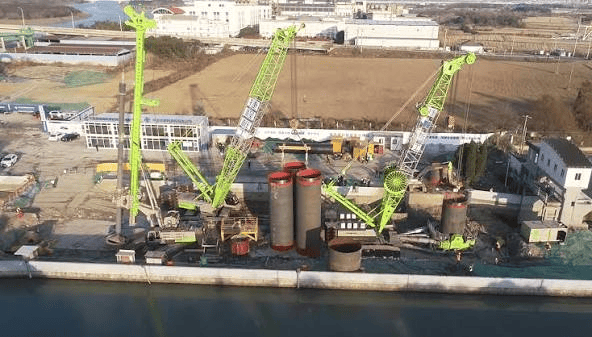
Advantages of Full Casing Construction
The full casing method offers several technical advantages when applied to suitable ground conditions.
Improved Borehole Stability
The primary advantage is continuous mechanical support of the borehole wall.
This can significantly reduce the risk of collapse in unstable formations.
Better Control of Groundwater
Steel casing provides a physical barrier between the excavation and surrounding ground.
This can improve drilling control in groundwater-bearing formations.
Reduced Ground Loss
Maintaining the casing close to the excavation face can help limit soil movement and ground loss.
This can be particularly important near existing buildings, roads, utilities, and other sensitive structures.
Suitable for Difficult Formations
The method can handle complex geological profiles where conventional unsupported drilling may be difficult.
The drilling tools can be changed as the formation changes while the casing maintains borehole support.
High Construction Control
Casing depth, drilling depth, verticality, and excavation progress can be monitored throughout the construction process.
This provides greater control over the completed pile geometry.
Limitations and Considerations
Although full casing construction provides important benefits, it also has several considerations.
Higher Equipment Requirements
The method may require a rotary drilling rig together with a casing oscillator, casing rotator, or other casing installation equipment.
This can increase mobilization and operating costs compared with simpler bored piling methods.
Casing Handling
Long and heavy casing sections require appropriate lifting equipment, storage space, and connection procedures.
The casing joints must also be designed to withstand the loads generated during installation and extraction.
Equipment Coordination
The drilling rig, casing system, drilling tools, reinforcement cage, concrete supply, and tremie system must work together.
Poor coordination can reduce productivity or create construction problems.
Ground Conditions Still Matter
Full casing does not eliminate all drilling challenges.
Hard rock, boulders, obstructions, and highly abrasive formations may still require specialized drilling tools and higher torque or crowd force.
Vibration and Site Constraints
When a vibro hammer is used for casing installation or extraction, vibration transmission to nearby structures, utilities, or sensitive facilities should be evaluated before construction. Site conditions and project specifications may determine whether vibratory installation is suitable or whether a lower-vibration casing method should be selected.
How to Select a Full Casing System
Selecting the right casing system requires consideration of several project parameters.
Pile Diameter
The casing internal and external dimensions must correspond with the required pile diameter and drilling tools.
Larger diameters generally require greater casing torque and installation force.
Pile Depth
Deep piles require sufficient casing length, appropriate casing joints, and equipment capable of handling the additional casing weight and friction.
Geological Conditions
The soil and rock profile determines the required casing installation force and drilling tool configuration.
Important considerations include:
- Soil density
- Gravel content
- Rock strength
- Abrasivity
- Boulder presence
- Groundwater level
- Potential borehole collapse
Casing Diameter and Wall Thickness
Casing dimensions must provide sufficient structural strength for installation, extraction, and handling.
The required wall thickness depends on casing diameter, length, installation method, ground resistance, and expected loads.
Casing Oscillator or Rotator Capacity
The casing installation equipment must provide sufficient torque and vertical force for the selected casing and geological conditions.
For demanding applications, equipment capacity should be evaluated against the actual casing friction and penetration resistance expected on site.
Vibro Hammer Capacity
Where a vibro hammer is selected for casing installation or extraction, its operating parameters should be matched to the casing and ground conditions. Important considerations include eccentric moment, centrifugal force, amplitude, frequency, suspended casing weight, and required lifting capacity. The selected configuration should also comply with project requirements for vibration and noise.
Drilling Rig Compatibility
The rotary drilling rig must be compatible with the casing system and drilling tools.
The available torque, winch capacity, crowd force, Kelly bar configuration, and hydraulic capacity should all be considered.
Full Casing Construction in Foundation Projects
Full casing construction is widely associated with bored pile foundations where borehole stability is a major concern.
Typical applications include:
- Building foundations
- Bridge foundations
- Highway and railway infrastructure
- Deep foundation projects
- Marine and waterfront construction
- Urban foundation works
- Large-diameter bored piles
- Projects with unstable or water-bearing formations
The method can be adapted to different pile diameters and depths by selecting suitable casing dimensions, installation equipment, and drilling tools.
Full Casing Construction: Key Points
Full casing construction provides a controlled approach to bored pile excavation by maintaining steel casing support throughout the drilling process.
The key elements of a successful full casing operation include:
- Selecting the appropriate casing diameter and wall thickness.
- Choosing a suitable casing oscillator or casing rotator.
- Matching the rotary drilling rig to the casing and drilling tools.
- Selecting drilling tools according to the geological conditions.
- Maintaining casing and borehole alignment during excavation.
- Cleaning the pile base before reinforcement and concrete placement.
- Coordinating reinforcement, tremie concrete placement, and casing extraction.
- Monitoring drilling depth, casing depth, verticality, and construction parameters.
The full casing method is particularly valuable when conventional borehole stabilization methods are insufficient or when strict control of ground movement is required.
For contractors working in challenging geological conditions, the correct combination of casing system, casing rotator or oscillator, rotary drilling rig, and drilling tools is essential for achieving reliable pile construction performance.
Conclusion
Full casing construction is a specialized bored piling method that uses continuous steel casing to support the borehole during excavation. By combining casing installation with controlled drilling, the method provides greater stability in loose, unstable, water-bearing, and mixed ground conditions.
The equipment configuration can include a casing oscillator, casing rotator, rotary drilling rig, drilling buckets, core barrels and tremie pipes, depending on the project requirements.
For projects where vibratory casing installation or extraction is suitable, a vibro hammer can be added to the equipment configuration to improve casing handling efficiency. The choice between a vibro hammer, casing oscillator, and casing rotator should be based on ground conditions, casing requirements, required installation force, and site constraints.
The success of a full casing project depends not only on the capacity of individual machines but also on how the casing system, drilling rig, tools, and concrete placement process work together.
For foundation contractors, choosing the appropriate full casing equipment should therefore begin with the project’s pile diameter, pile depth, geological profile, groundwater conditions, casing requirements, and construction method.
Rockway Equipment Trading LLC supplies foundation drilling equipment and piling solutions for demanding construction applications. Our equipment range includes drilling rigs, casing systems, casing-related equipment, drilling tools, and other foundation construction equipment for projects in the Middle East and international markets.
Frequently Asked Questions(FAQ)
Full casing construction is a bored pile method in which steel casing is progressively installed through the required pile depth while excavation takes place inside the casing. The casing provides continuous support to the surrounding ground.
Common equipment includes rotary drilling rigs, casing oscillators, casing rotators, vibro hammers, drilling buckets, core barrels, rock drilling tools, and tremie pipes. The equipment configuration depends on pile diameter, depth, and ground conditions.
Yes. A vibro hammer can be used for casing installation or extraction when ground conditions and site constraints are suitable. It applies high-frequency vibration to help reduce soil resistance and improve casing penetration or removal.
Full casing construction is commonly used in unstable soil, loose sand and gravel, groundwater-bearing formations, mixed ground conditions, urban construction, and large-diameter or deep bored pile projects where borehole stability is important.
A casing rotator advances casing primarily through controlled rotary torque and vertical force, while a casing oscillator uses oscillating rotational movement combined with vertical force. The appropriate system depends on ground conditions, casing requirements, installation depth, and project constraints.