
Choosing the right tremie pipe is essential for achieving reliable concrete placement in bored pile construction. The pipe system must deliver fresh concrete continuously from the surface to the bottom of the borehole while limiting contact with groundwater or drilling slurry.
The correct selection depends on more than pipe diameter. Contractors should also consider pile diameter, drilling depth, concrete workability, reinforcement cage configuration, pipe section length, wall thickness, connection type, and lifting equipment.
For foundation contractors, matching the tremie pipe to the project conditions can help reduce concrete blockage, improve placement efficiency, and minimize the risk of defects in the completed pile.
Key Factors for Tremie Pipe Selection
Before ordering a tremie pipe system, contractors should evaluate several project-specific parameters:
- Pile diameter
- Borehole depth
- Concrete workability and slump
- Required concrete flow rate
- Reinforcement cage dimensions
- Tremie pipe diameter
- Pipe section length
- Wall thickness
- Connection type
- Crane or lifting equipment capacity
- Groundwater and drilling slurry conditions
These factors should be considered together rather than selecting a tremie pipe based only on diameter.
How to Choose the Right Tremie Pipe Diameter
Tremie pipe diameter directly affects concrete flow and pumping resistance. Common outside diameters for bored pile applications include 200 mm, 250 mm, and 300 mm.
A larger pipe can provide greater concrete flow capacity, but it also requires sufficient clearance within the reinforcement cage and borehole.
As a general reference:
| Tremie Pipe Diameter | Typical Application |
|---|---|
| 200 mm | Smaller bored piles and restricted reinforcement cages |
| 250 mm | General bored pile construction |
| 300 mm | Large-diameter piles and higher concrete flow requirements |
The final diameter should be selected according to the pile diameter, concrete mix, reinforcement cage arrangement, and project specifications.
A pipe that is too small may increase flow resistance and the risk of blockage. Conversely, an unnecessarily large pipe can create handling difficulties and may not provide sufficient clearance inside the reinforcement cage.
Match Tremie Pipe Diameter to Pile Diameter
Pile diameter is one of the first parameters to check when selecting a tremie pipe.
For example, a 600 mm bored pile and a 2000 mm bored pile have very different concrete placement requirements. Larger piles generally require a greater volume of concrete and may require a larger tremie pipe or multiple concrete delivery considerations.
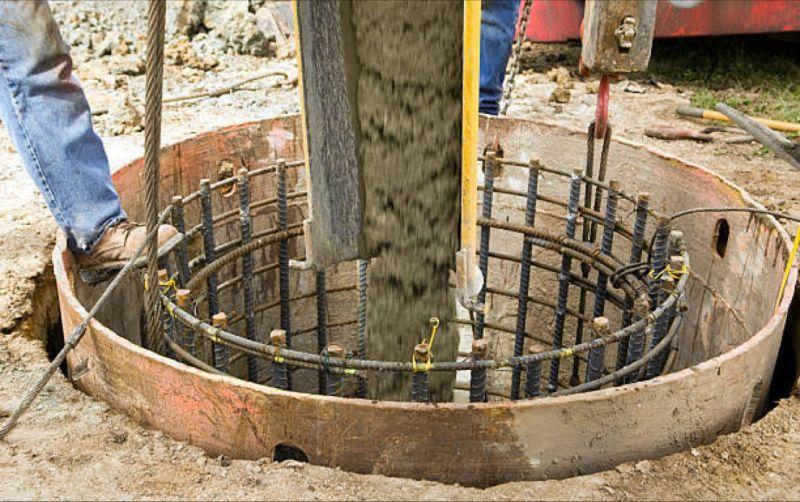
The selected tremie pipe should also fit inside the reinforcement cage without interfering with the steel bars.
Before placing an order, contractors should confirm:
- Designed pile diameter
- Reinforcement cage internal clearance
- Required tremie pipe diameter
- Concrete placement rate
- Local construction specifications
Proper clearance is especially important when reinforcement cages are densely arranged.
How to Determine the Required Tremie Pipe Length
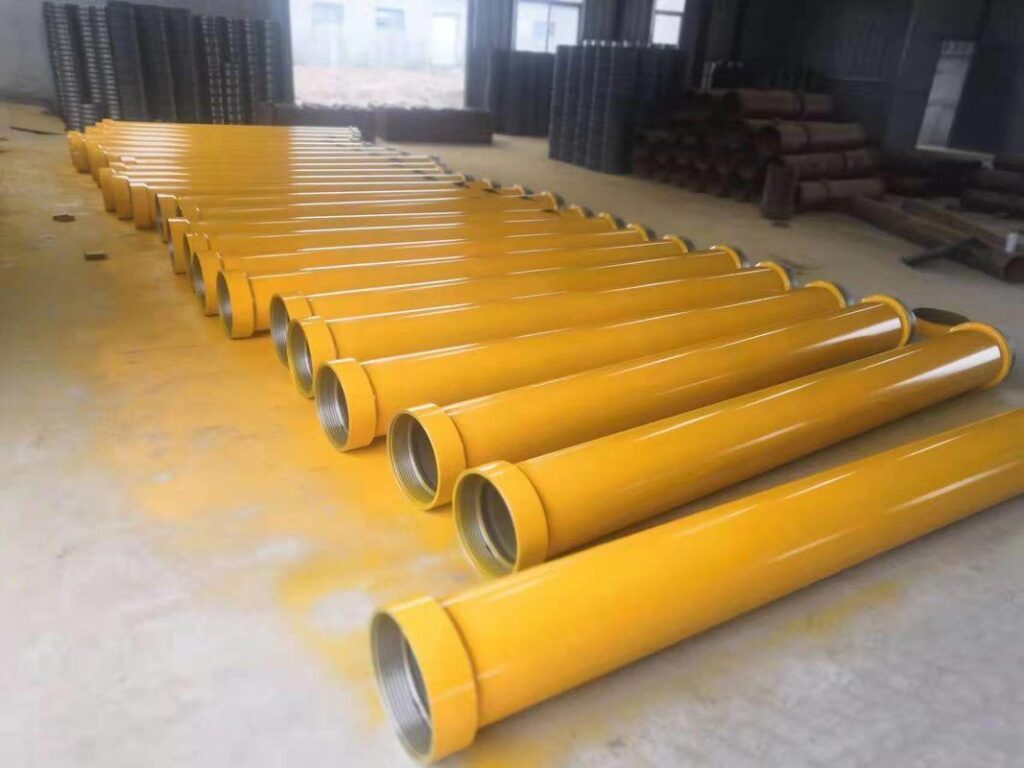
Tremie pipes are normally supplied as multiple sections that are assembled to achieve the required working length.
Common section lengths may range from approximately 0.5 m to 3.0 m, depending on the connection system and handling requirements. Longer sections can reduce the number of joints, while shorter sections provide greater flexibility when adjusting the working length.
The total tremie length should account for:
- Borehole depth
- Position of the pile reinforcement cage
- Required pipe embedment
- Concrete level during placement
- Lifting equipment capacity
The tremie outlet should initially be positioned near the bottom of the borehole. As concrete rises, pipe sections can be removed progressively while maintaining the required embedment of the outlet in fresh concrete.
Wall Thickness and Structural Strength
Tremie pipes are repeatedly assembled, lifted, lowered, and cleaned during foundation construction. Therefore, wall thickness is an important consideration for service life and structural reliability.
A thicker pipe wall can provide greater resistance to:
- Bending
- Impact during handling
- Wear
- Deformation
- Repeated assembly and removal
The appropriate wall thickness depends on pipe diameter, section length, handling method, project depth, and expected operating conditions.
For projects involving deep piles or frequent reuse, contractors should prioritize a robust pipe structure rather than selecting solely on initial purchase price.
Choosing the Right Tremie Pipe Connection
The connection between pipe sections affects installation speed, sealing performance, and overall handling efficiency.
Three common connection types are threaded, flanged, and quick coupling systems.
Threaded Tremie Pipe
Threaded connections are widely used for general bored pile construction.
Advantages include:
- Reliable connection
- Good sealing performance
- Simple structure
- Suitable for repeated use
Threaded systems can be a practical choice for contractors handling standard foundation projects.
Flanged Tremie Pipe
Flanged connections use bolted or mechanically secured joints and are suitable for applications requiring strong and stable connections.
They are commonly considered for:
- Large-diameter bored piles
- Deep foundation projects
- Heavy-duty applications
The main consideration is that assembling and removing flanged sections generally requires more time than quick coupling systems.
Quick Coupling Tremie Pipe
Quick coupling systems are designed to reduce assembly and disassembly time.
They are particularly useful when:
- Pipe sections need to be changed frequently
- Construction schedules are tight
- Multiple pile depths are involved
- Fast equipment handling is important
For high-volume foundation projects, faster connection systems can help reduce labor and equipment downtime.
Select Tremie Pipe According to Concrete Workability
Concrete properties also influence tremie pipe selection.
Concrete used for tremie placement needs sufficient workability to move through the pipe without excessive resistance. If the mix is too stiff, the risk of blockage can increase.
Important factors include:
- Concrete slump
- Aggregate size
- Cement content
- Water-cement ratio
- Admixture selection
- Required concrete flow rate
The pipe diameter should be considered together with the concrete mix design. A pipe system that works well with one concrete mix may not provide the same performance with another.
For this reason, contractors should coordinate tremie pipe selection with the concrete supplier and project engineer.
Consider Reinforcement Cage Clearance
The reinforcement cage can significantly affect tremie pipe selection.
The tremie pipe must pass through the reinforcement cage without becoming obstructed by longitudinal bars, spacers, or other components.
Before installation, check:
- Internal cage diameter
- Bar spacing
- Cage deformation
- Tremie pipe outside diameter
- Required operating clearance
For densely reinforced piles, a smaller pipe diameter may provide better clearance, provided it can still deliver the required concrete flow.
Tremie Pipe Selection for Different Pile Conditions
Different foundation conditions can require different tremie pipe configurations.
Deep Bored Piles
Deep piles require longer tremie assemblies and reliable connections capable of handling repeated lifting and lowering.
A modular pipe system with manageable section lengths can simplify installation and removal.
Large-Diameter Bored Piles
Large piles require substantial concrete volumes. A 250 mm or 300 mm tremie pipe may be considered depending on concrete properties, reinforcement configuration, and project specifications.
Bored Piles Below Groundwater
When groundwater is present, continuous concrete placement becomes particularly important. The tremie pipe must maintain sufficient embedment in fresh concrete to prevent groundwater or slurry from entering the pipe.
Slurry-Supported Boreholes
For boreholes supported by bentonite or polymer slurry, the tremie system must allow concrete to displace slurry progressively from the bottom upward.
Reliable connections and proper pipe handling are essential to prevent slurry contamination.
How to Choose the Right Tremie Pipe Section Length
Section length affects both installation speed and flexibility.
Short sections provide:
- Easier handling
- More precise length adjustment
- Better suitability for restricted sites
Longer sections provide:
- Fewer connections
- Faster assembly
- Reduced handling time
For example, a project with a 20 m working depth may use several sections of different lengths to achieve the required configuration rather than using identical sections throughout.
The best combination depends on crane capacity, site access, required working length, and connection type.
Check Crane and Lifting Equipment Capacity
Tremie pipe selection should also account for the lifting equipment available on site.
The total weight of the assembled tremie system increases with:
- Pipe diameter
- Wall thickness
- Total length
- Number of components
- Hopper and lifting cap configuration
For deep piles, contractors may need to remove sections progressively during concrete placement. The lifting system must therefore be capable of safely handling individual pipe sections as well as the initial assembly.
Tremie Pipe Selection Checklist
Before purchasing a tremie pipe system, contractors can use the following checklist:
| Parameter | What to Check |
|---|---|
| Pile diameter | Designed pile diameter and borehole size |
| Pipe diameter | 200, 250, 300 mm or project-specific size |
| Pile depth | Required total working length |
| Section length | 0.5–3.0 m or customized length |
| Wall thickness | Required strength and durability |
| Connection | Threaded, flanged, or quick coupling |
| Concrete | Slump, aggregate size, and flow characteristics |
| Reinforcement cage | Internal clearance and bar spacing |
| Ground conditions | Groundwater, slurry, sand, gravel, and unstable soil |
| Lifting equipment | Crane capacity and handling method |
Common Tremie Pipe Selection Mistakes
Choosing the Pipe Diameter Based Only on Pile Diameter
Pile diameter is important, but it is not the only factor. Concrete properties, reinforcement cage clearance, and placement requirements must also be considered.
Ignoring Connection Type
A pipe with suitable dimensions may still be inefficient if its connection system takes too long to assemble or does not match the contractor’s working method.
Using Insufficient Pipe Length
The tremie system must reach the required depth while allowing operators to maintain the proper discharge position during initial concrete placement.
Selecting a Pipe That Is Too Heavy
Heavy-duty construction can improve durability, but excessive weight can make lifting and handling more difficult. The pipe should provide an appropriate balance between strength and maneuverability.
Failing to Consider Concrete Properties
Concrete workability directly affects flow through the tremie pipe. Pipe selection should therefore be coordinated with the concrete mix design.
How to Improve Tremie Pipe Service Life
A well-selected tremie pipe can be reused for many foundation projects when properly maintained.
Recommended practices include:
- Clean concrete residue immediately after use.
- Inspect threads and coupling surfaces.
- Check pipe sections for bending or deformation.
- Inspect welds and connection areas regularly.
- Replace damaged seals or connection components.
- Store pipe sections on stable supports.
- Protect steel surfaces against corrosion when required.
Regular maintenance helps reduce unexpected downtime and keeps the tremie system ready for subsequent projects.
Choose a Tremie Pipe Based on the Complete Project
There is no single tremie pipe specification suitable for every bored pile project. The right choice depends on the combination of pile diameter, drilling depth, concrete properties, reinforcement cage clearance, ground conditions, connection type, and lifting equipment.
For general bored pile applications, 200 mm, 250 mm, and 300 mm pipe diameters provide common options, while section lengths of approximately 0.5–3.0 m allow contractors to build the required working length. However, project-specific engineering requirements should always determine the final specification.
For contractors purchasing tremie pipes for bored piling projects, selecting the complete system—including pipe sections, connections, hopper, lifting cap, and base pipe—can provide better compatibility and more efficient site operation.
Rockway supplies tremie pipe systems and piling accessories for foundation drilling and bored pile construction. Customized diameters, lengths, connection types, and configurations can be considered according to project requirements.
Frequently Asked Questions(FAQ)
Common tremie pipe diameters include 200 mm, 250 mm, and 300 mm. The appropriate size depends on pile diameter, concrete workability, reinforcement cage clearance, and project specifications.
The total working length should be sufficient to reach the bottom of the borehole while allowing the pipe to be gradually raised as concrete fills the pile. Individual sections are commonly available in approximately 0.5–3.0 m lengths.
Threaded connections are suitable for general applications where reliable connections and repeated use are priorities. Quick coupling systems are advantageous when rapid assembly and removal are important. The best option depends on project requirements and site working conditions.
Contractors should confirm the pile diameter, borehole depth, concrete properties, reinforcement cage clearance, pipe diameter, section length, wall thickness, connection type, ground conditions, and lifting equipment capacity.
Contractors should confirm the pile diameter, borehole depth, concrete properties, reinforcement cage clearance, pipe diameter, section length, wall thickness, connection type, ground conditions, and lifting equipment capacity.
Yes. Tremie pipe systems can be manufactured or configured according to project requirements, including pipe diameter, section length, wall thickness, connection type, hopper configuration, and lifting components.