Bored piles are deep foundation elements constructed by drilling a hole into the ground and filling it with reinforced concrete. They are widely used for buildings, bridges, industrial facilities, retaining structures, and other projects where deep foundations are required.
The construction method for a bored pile depends on several factors, including ground conditions, pile diameter, pile depth, groundwater, borehole stability, and project requirements.
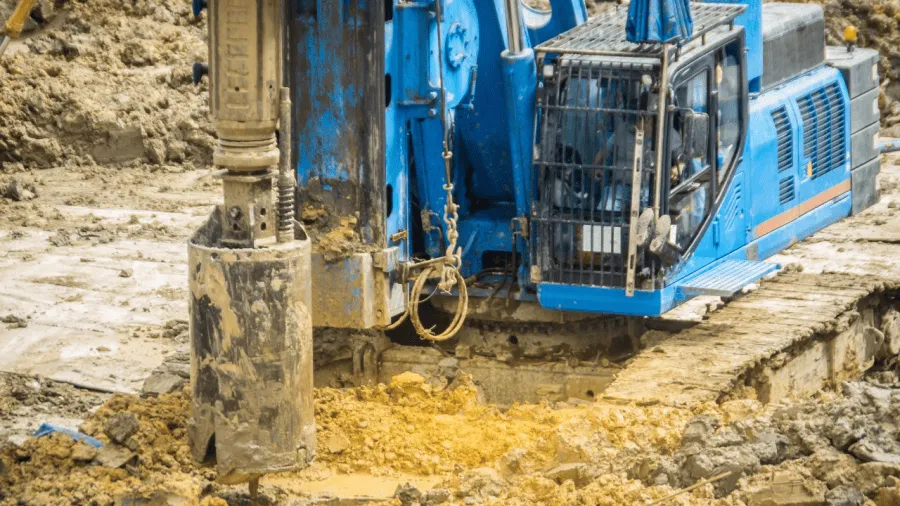
Rotary drilling is commonly used for bored pile construction because the drilling rig can work with different tools according to the ground conditions. Drilling buckets, rock augers, core barrels, casing systems, and other equipment can be selected to handle different soil and rock formations.
What Is a Bored Pile?
A bored pile is a cast-in-place deep foundation created by drilling a hole to the required depth and then filling the hole with concrete, usually together with a reinforcement cage.
Unlike driven piles, which are installed by driving a prefabricated pile into the ground, bored piles are formed directly at the construction site.
A typical bored pile consists of:
- Reinforced concrete
- Steel reinforcement cage
- Drilled borehole
- Concrete cover
- Pile shaft
- Pile toe
The pile diameter and depth are determined by the structural design and ground conditions.
Bored Pile Construction Process
Although construction procedures vary between projects, a typical bored pile construction sequence includes several main stages.
1. Site Preparation and Pile Positioning
Before drilling begins, the working platform should be prepared to provide stable support for the drilling rig.
The pile position is then established according to the construction drawings. Accurate positioning is important because deviations in pile location can affect the final foundation layout.
2. Casing Installation
Temporary casing may be installed when the upper soil is unstable or when groundwater and loose formations could affect borehole stability.
The casing supports the borehole wall and helps maintain the required diameter during drilling.
The length and diameter of the casing depend on the site conditions and construction requirements.
3. Borehole Drilling
The rotary drilling rig drills the borehole using a suitable drilling tool.
Different tools can be selected as the ground conditions change.
For example:
- Drilling buckets for soil and loose formations
- Rock augers for harder ground and weathered rock
- Core barrels for hard rock formations
The Kelly bar transfers torque and crowd force from the drilling rig to the drilling tool.
4. Borehole Cleaning
After the required drilling depth is reached, loose material and sediment at the bottom of the borehole are removed.
Proper cleaning helps prepare the borehole for reinforcement cage installation and concrete placement.
A cleaning bucket or other suitable tool may be used depending on the borehole condition and project requirements.
5. Reinforcement Cage Installation
The reinforcement cage is assembled according to the pile design and then lowered into the borehole.
The cage should be positioned correctly to maintain the required concrete cover and reinforcement arrangement.
6. Tremie Pipe Installation
When concrete must be placed below groundwater or under other conditions where direct pouring is unsuitable, a tremie pipe can be used.
The tremie pipe delivers concrete from the top of the borehole to the required depth while maintaining a continuous concrete placement process.
7. Concrete Placement
Concrete is placed into the borehole according to the project specifications.
When a tremie system is used, concrete placement should be controlled to maintain continuous flow and minimize the risk of contamination or segregation.
8. Casing Removal
When temporary casing is used, it may be removed during concrete placement or after the required concrete level has been reached, depending on the construction method.
The removal process should be controlled to maintain the integrity of the newly placed concrete.
Bored Pile Construction Methods
Different drilling and construction methods can be used depending on the ground conditions and project requirements.
Rotary Drilling
Rotary drilling is a common method for constructing bored piles.
A rotary drilling rig uses a Kelly bar and interchangeable drilling tools to excavate the borehole. The ability to change tools makes rotary drilling suitable for different soil and rock conditions.
Typical tools include drilling buckets, augers, core barrels, and specialized rock drilling tools.
Rotary Drilling with Casing
Temporary casing can be combined with rotary drilling when the borehole requires additional support.
This method is commonly considered for:
- Loose soil
- Unstable formations
- Sand
- Groundwater conditions
- Boreholes prone to collapse
The casing helps maintain borehole stability while drilling continues.
Full Casing Drilling
Full casing drilling uses casing to support the borehole during the drilling process.
It can provide greater control of borehole stability in difficult ground conditions, although it generally requires additional casing equipment and a suitable installation system.
Continuous Flight Auger Piling
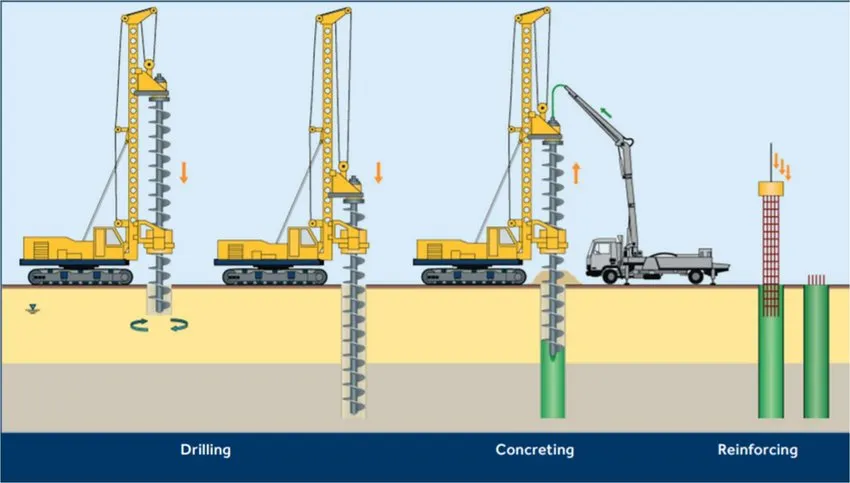
Continuous Flight Auger (CFA) piling uses a continuous flight auger to drill into the ground. Concrete is pumped through the hollow stem of the auger while the auger is withdrawn.
CFA piling can provide high production rates under suitable ground conditions. However, its applicability depends on factors such as ground conditions, pile dimensions, required depth, and reinforcement requirements.
Bored Pile Drilling Tools
The selection of drilling tools has a direct effect on drilling efficiency and tool wear.
Drilling Bucket
Drilling buckets are commonly used for:
- Clay
- Soil
- Sand
- Gravel
- Other relatively loose formations
Different bucket designs and cutting systems can be selected according to the ground conditions.
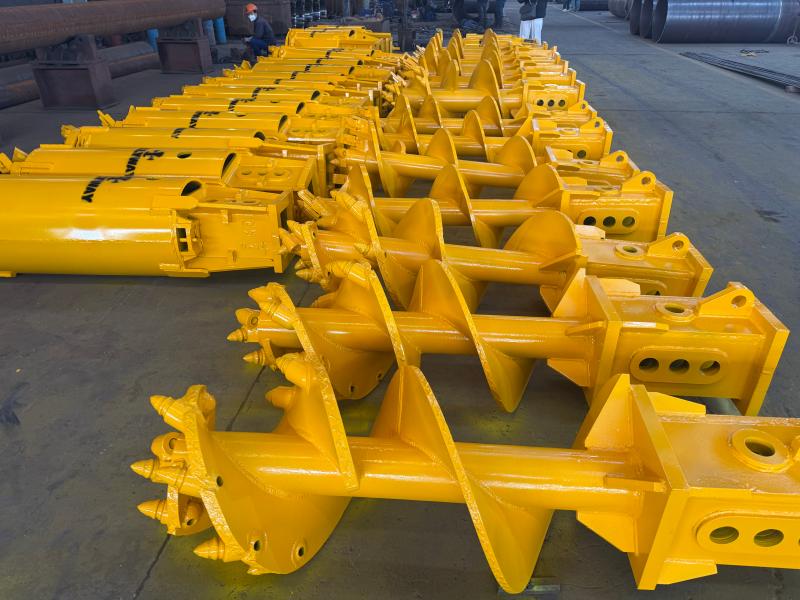
Rock Auger
Rock augers are used for harder formations where standard soil drilling buckets may not provide sufficient penetration.
They can be equipped with different tooth configurations according to the required drilling conditions.
Rock augers may be used in:
- Hard soil
- Weathered rock
- Fractured rock
- Medium-hard formations
Core Barrel
Core barrels are used for drilling through hard rock formations.
When rock cannot be efficiently excavated with conventional drilling buckets or augers, a core barrel can be used to cut and recover sections of the rock formation.
Kelly Bar
The Kelly bar connects the rotary drilling rig with the drilling tool and transfers torque and crowd force during drilling.
The appropriate Kelly bar configuration depends on:
- Drilling depth
- Rig model
- Required torque
- Tool connection
- Ground conditions
Proper compatibility between the Kelly bar and drilling tool is important for efficient drilling operation.
How Ground Conditions Affect Bored Pile Construction
Ground conditions are one of the most important factors when selecting a bored pile construction method.
Stable Soil
In relatively stable soil, conventional rotary drilling may be sufficient. A drilling bucket can often be used to excavate the borehole.
Loose Sand
Loose sand can be more difficult to maintain because the borehole wall may collapse.
Temporary casing or another suitable borehole stabilization method may therefore be required.
Gravel and Cobbles
Large gravel and cobbles can affect drilling efficiency and tool penetration.
A suitable drilling bucket or specialized drilling tool should be selected according to the size and characteristics of the material.
Weathered Rock
Weathered rock can range from relatively soft material to stronger rock formations.
Rock augers or other rock drilling tools may be used depending on the formation strength.
Hard Rock
Hard rock generally requires specialized drilling tools.
Core barrels, rock augers, and other rock drilling systems can be selected according to the rock strength and project requirements.
Mixed Ground
Some projects encounter several ground conditions along the depth of a single pile.
For example:
Soil → Gravel → Weathered Rock → Hard Rock
In this situation, the drilling tool may need to be changed as the formation changes.
How to Choose a Bored Pile Drilling Method
There is no single construction method suitable for every bored pile project.
Several factors should be evaluated together:
| Factor | Consideration |
|---|---|
| Ground conditions | Soil, sand, gravel, weathered rock, hard rock |
| Groundwater | May affect borehole stability |
| Pile diameter | Determines required drilling tool size |
| Pile depth | Affects Kelly bar and drilling equipment selection |
| Borehole stability | May require casing or other support |
| Rock strength | Influences drilling tool selection |
| Project requirements | Determines construction method and quality requirements |
| Equipment availability | Affects practical method selection |
| Production requirements | Influences drilling method and tool configuration |
The drilling method should be selected based on the actual geotechnical conditions rather than using the same method for every project.
Common Problems in Bored Pile Construction
Borehole Collapse
Borehole collapse can occur when the surrounding ground is unstable or groundwater affects the borehole wall.
Temporary casing or another suitable stabilization method may be required.
Borehole Deviation
Borehole deviation can affect pile position and verticality.
Rig positioning, ground conditions, drilling tool selection, and drilling control can all influence borehole alignment.
Low Drilling Efficiency
Low drilling efficiency can result from using an unsuitable drilling tool for the ground conditions.
For example, using a standard soil bucket in hard rock can result in slow penetration and increased tool wear.
Excessive Sediment
Sediment remaining at the bottom of the borehole can affect pile construction quality.
The borehole should therefore be cleaned according to the project requirements before reinforcement and concrete placement.
Drilling Tool Wear
Drilling tools can experience significant wear when working in abrasive soil, gravel, or rock.
Regular inspection of cutting teeth, holders, adapters, and other wear components can help maintain drilling performance.
Bored Pile Quality Control
Quality control should be maintained throughout the entire bored pile construction process.
Important inspection points may include:
- Pile position
- Borehole diameter
- Borehole depth
- Borehole verticality
- Borehole stability
- Bottom sediment
- Casing position
- Reinforcement cage position
- Concrete quality
- Concrete placement
- Construction records
The specific acceptance criteria should follow the applicable project specifications and engineering requirements.
Bored Pile Construction Equipment
A typical bored pile project may require several types of equipment and tools.
Main Equipment
- Rotary drilling rig
- Kelly bar
- Drilling bucket
- Rock auger
- Core barrel
- Casing pipe
- Casing installation equipment
- Cleaning bucket
- Reinforcement cage equipment
- Tremie pipe
- Concrete equipment
The actual equipment combination depends on pile dimensions, ground conditions, construction method, and project requirements.
How to Improve Bored Pile Drilling Efficiency
Several factors can influence drilling productivity.
Match the Tool to the Ground
The drilling tool should correspond to the actual formation being drilled.
Using a suitable tool can improve penetration and reduce unnecessary wear.
Maintain Proper Tool Condition
Worn cutting teeth and holders can reduce drilling efficiency. Regular inspection and timely replacement of wear components can help maintain performance.
Use Compatible Kelly Bars
The Kelly bar should match the drilling rig, tool connection, and required drilling depth.
Monitor Borehole Conditions
Changes in soil, rock, and groundwater conditions should be considered during drilling.
Tool selection and drilling parameters may need to change when the formation changes.
Maintain Borehole Stability
Where borehole collapse is a risk, appropriate casing or stabilization methods should be considered before drilling progresses.
Selecting the Right Approach for Bored Pile Construction
Bored pile construction requires coordination between the drilling method, ground conditions, drilling tools, casing system, and construction equipment.
A method that works efficiently in stable soil may not be suitable for loose sand, groundwater, gravel, weathered rock, or hard rock. For this reason, ground investigation and construction planning should be considered before selecting the drilling equipment and tools.
During construction, the drilling process should also be adjusted when ground conditions change. Using the appropriate drilling bucket, rock auger, core barrel, Kelly bar, or casing system can help maintain drilling efficiency and borehole stability.
For foundation contractors and drilling crews, understanding the relationship between ground conditions and drilling tool selection is an important part of maintaining consistent bored pile construction quality.
Frequently Asked Questions (FAQ)
A bored pile is a cast-in-place deep foundation created by drilling a borehole into the ground and filling it with concrete, usually with a reinforcement cage.
Core barrels, rock augers, and other specialized rock drilling tools can be used for hard rock. The appropriate tool depends on the rock formation and project requirements.
Common equipment includes rotary drilling rigs, Kelly bars, drilling buckets, rock augers, core barrels, casing pipes, cleaning buckets, tremie pipes, and concrete equipment.
Casing may be required when the borehole is unstable or when loose soil, groundwater, or other ground conditions create a risk of borehole collapse.
The drilling tool affects penetration, drilling efficiency, tool wear, and the ability to handle different ground conditions. Selecting an appropriate tool is therefore an important part of bored pile construction planning.