

A core barrel stuck in rock can stop a piling operation and place additional loads on the drilling rig, Kelly bar and tool connection. Possible causes include wedged rock fragments, reduced cutting clearance, borehole irregularities and damaged cutting components. An unseparated rock core can also restrict extraction, but it needs to be distinguished from a barrel trapped against the borehole.
The first task is to identify the restriction before applying additional torque or pull. This guide focuses on large-diameter, Kelly-driven core barrels used in bored pile and rock-socket construction.
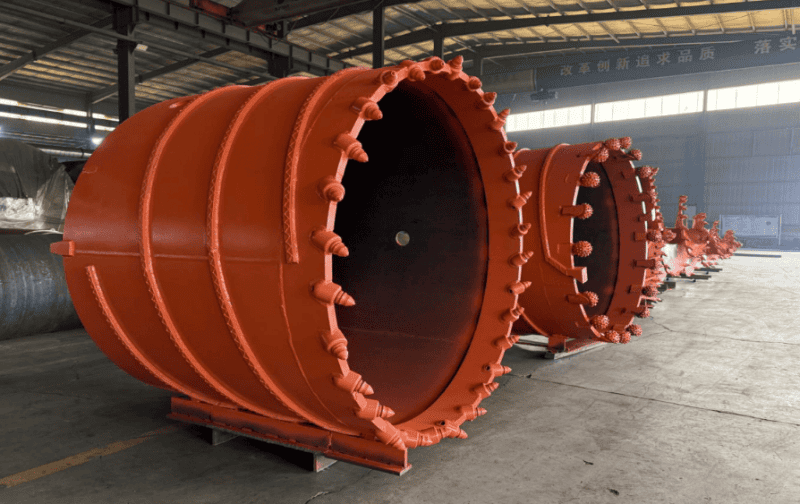
First Identify What Is Actually Stuck
“Stuck core barrel” can describe several different conditions. The site team should establish which one has occurred using the drilling record and observations already available.
| Observed condition | What needs investigation |
|---|---|
| The barrel remains in the borehole and cannot be withdrawn normally | External wedging, cutting clearance, borehole geometry, alignment and mechanical damage |
| The barrel can be withdrawn, but the rock core remains at the bottom | Core separation and the method needed to remove the remaining rock |
| The barrel reaches the surface, but the core will not discharge | Internal wedging and the approved unloading arrangement |
A core barrel cuts an annular groove around a central rock mass. Completing that cut does not automatically detach or remove the core. FHWA’s drilled-shaft guidance treats core separation and removal as practical challenges that may require additional tooling.
These situations should not be treated as the same fault. A retained core at the surface requires a different assessment from a barrel trapped deep in a rock socket.
Why a Core Barrel Can Become Stuck in Rock
The following are possible mechanisms to investigate, rather than diagnoses that can be confirmed from a torque reading alone.
Rock Fragments or Cuttings Have Become Wedged
Broken rock can lodge between the core and the inside of the barrel, or between the barrel and the surrounding formation. Fractured ground can produce irregular blocks instead of a stable cylindrical core.
A sudden change in resistance may therefore indicate wedging rather than a simple increase in rock hardness. Review the formation encountered and the material recovered on previous runs.
Cutting Clearance Has Been Reduced
The cutting arrangement must provide the clearance intended by the tool design. Worn gauge-cutting components, damaged holders or a distorted barrel can alter that relationship and increase body contact. Manufacturer guidance identifies cutting geometry and free-cutting clearance as design considerations. Stahl- und Apparatebau
Compare the cutting envelope, barrel dimensions and wear condition with the manufacturer’s drawings. There is no universal clearance value suitable for every core barrel, rock formation and casing arrangement.
The Core Has Not Separated as Expected
A long, continuous core may remain attached to the rock below the annular cut. If material inside the barrel grips that core, withdrawal can become difficult even though the outside of the barrel is not wedged against the borehole.
Review the length of the current run, the rock discontinuities and the intended core-separation method. Increasing pull without identifying this condition does not establish a suitable removal method.
Borehole Geometry or Rock Movement Is Restricting the Tool
Ledges, changes in alignment and loosened blocks can obstruct the withdrawal path. Passing through a layer during drilling does not guarantee that the same path will remain clear during extraction.
The assessment should include the casing toe position, transitions between formations and any evidence of wall instability. Tool diameter alone cannot explain every restriction.
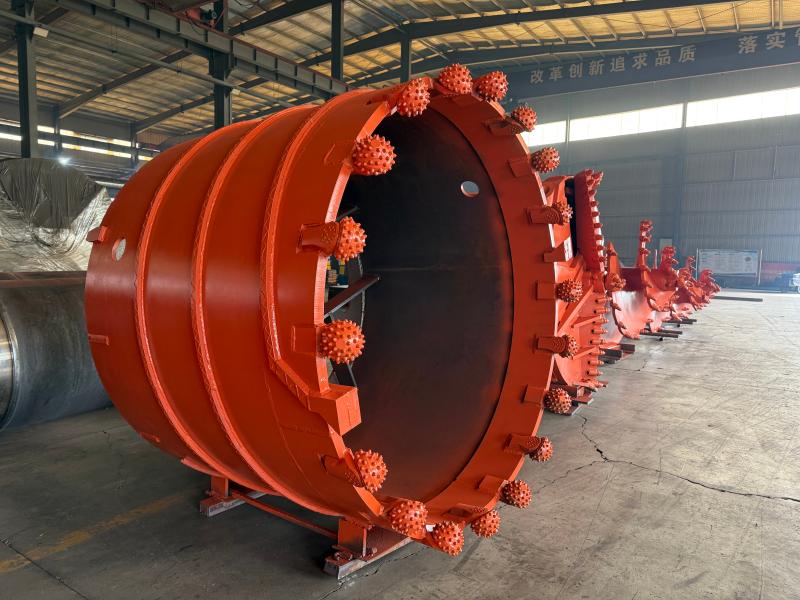
Cutting Components or the Barrel Have Been Damaged
A seized roller, broken tooth, displaced holder or deformed cutting ring may change how the tool engages the rock. Connection damage can also complicate the response.
Higher torque or slower penetration cannot reliably distinguish tool damage from harder ground. Previous inspection photographs, maintenance records and the timing of the change in performance can help narrow the investigation.
Record the Site Conditions Before Planning Recovery
A useful record allows the contractor, rig manufacturer and tooling supplier to assess the same information.
| Information | Details to record |
|---|---|
| Tool position | Borehole depth, rock-entry depth, current cutting depth and estimated barrel engagement |
| Last normal movements | When the barrel last rotated and withdrew freely; what changed before the restriction |
| Operating records | Available torque, extraction-load and hydraulic-pressure records, including alarms |
| Ground conditions | Rock description, fractures, boulders, weak seams and relevant investigation results |
| Tool details | Drawing, cutting diameter, barrel dimensions, weight, cutter arrangement and connection details |
| Borehole support | Casing depth, groundwater or slurry conditions, and observed changes |
| Equipment configuration | Exact rig model, Kelly bar configuration, connection arrangement and applicable operating limits |
Keep measurements separate from assumptions. For example, a pressure increase is an observation; “a rock block is wedged outside the barrel” remains a hypothesis until supported by further evidence.
Where the tool uses a circulation system, also record changes in flow or fluid losses. That information should be interpreted for the actual system fitted.
Build the Recovery Plan Around the Restriction
The responsible site team should agree on a recovery method with appropriate input from the rig manufacturer, tooling supplier and geotechnical personnel. A general troubleshooting article cannot determine the permitted movements or loads for a particular incident.
Confirm the equipment limits. Review the complete load path through the rig, winch arrangement, Kelly bar, adapters, pins and barrel. The winch’s advertised maximum pull is not an approved recovery load for every configuration. Combined rotation and extraction loads, equipment condition and rig stability also need assessment.
Match the proposed method to the suspected cause. A barrel trapped by external debris presents a different problem from a removable barrel above an attached core. The latter may require a separately planned core-breaking or retrieval operation. A suspected mechanical failure requires manufacturer input before further movement.
Define operating boundaries and stop conditions. The plan should identify who directs the work, permitted actions, monitoring requirements and when to stop and reassess. Unexplained load increases, connection movement or changes in rig stability must be addressed before continuing.
Do not improvise reverse rotation, shock loading or additional pulling equipment. Depending on the assembly, these actions can loosen connections, introduce uncontrolled loads or damage components. Any proposed use needs specific technical approval within the recovery plan.
Inspect before returning to production. Recovering the barrel does not establish that it remains serviceable. Check the cutting ring, shell, welds, holders, connection and recovered components, with further examination where the responsible personnel require it. The borehole condition and any loose material must also be reassessed.
If a core remains inside a recovered barrel, use the approved unloading procedure with the tool and core properly supported and restrained. Personnel must remain clear of suspended tools and potential falling material.
Reduce Repeat Jamming on the Next Drilling Run
A successful recovery should lead to a documented change where a contributing factor has been identified.
| Finding | Follow-up before restarting |
|---|---|
| Worn or damaged cutting components | Restore the specified cutting geometry and inspect the surrounding structure |
| Internal fragments or difficult core release | Review the run length, core condition and unloading or separation arrangement |
| External debris or an obstructed withdrawal path | Reassess borehole support, cleaning and the planned tool sequence |
| Repeated body contact or uneven wear | Check dimensions, alignment and the suitability of the tool configuration |
| Mechanical damage | Complete the required repair, inspection and acceptance before reuse |
Run length should be selected for the formation and the intended core-handling method. A deeper uninterrupted cut is not automatically more productive if it repeatedly produces difficult cores.
Barrel openings, cutting geometry and material-removal features also vary between designs. A feature fitted to one barrel should not be assumed to exist on another. Any modification needs review against the actual drawing and loading conditions.
For a broader comparison of cutting systems, see Rockway’s Core Barrel Types, Applications and Selection Guide.
Need a Replacement or Revised Core Barrel Configuration?
Repeated jamming may justify reviewing the tool configuration alongside the site’s drilling method. Replacing the barrel with a larger or heavier unit does not, by itself, resolve the cause.
Rockway supplies core barrels with bullet teeth and core barrels with roller bits for foundation drilling applications. Configuration and connection details should be confirmed for the particular rig and project. Rockway Equipment Trading LLC
For a tooling review and quotation, send the site information above together with:
- The existing barrel drawing and available photographs.
- Required pile diameter, drilling depth and rock information.
- Whether the requirement is for cutting components, a replacement barrel or a revised configuration.
- Required quantity, delivery location and target delivery date.
Contact Rockway with your rig model, tool details and project requirements to discuss a suitable supply option.
Frequently Asked Questions
Possible causes include wedged rock fragments, reduced cutting clearance, borehole irregularities and damaged cutting components. A core that remains attached to the formation can also restrict withdrawal. The cause should be assessed from the drilling record and tool configuration before planning recovery.
Reverse rotation should only be considered where it is permitted for the fitted rig, Kelly bar and tool connections, and included in the approved recovery method. Depending on the assembly, reversing can loosen connections or introduce damaging loads.
A roller-bit core barrel is not a guarantee against jamming. Cutting-system selection addresses rock-breaking performance, while fragments, cutting clearance, core separation and borehole conditions also affect extraction. Review the cause of the incident before changing the tool configuration.
A recovered barrel should be inspected and accepted before reuse. Check the cutting ring, shell, welds, holders, connection and any damaged components. Repairs or further examination may be required, depending on the incident and the inspection findings.
Provide the rig model, existing barrel drawing or photographs, cutting diameter, barrel dimensions, Kelly connection details and ground information. Include the required quantity, delivery location and target delivery date. Describe the jamming incident if a revised configuration is being considered.