
In hard rock drilling, conventional drilling tools can struggle to penetrate dense and abrasive formations efficiently. A roller bit works differently by using rotating cutting elements to apply concentrated loads to the rock surface. As the bit rotates under drilling pressure, the rollers contact the formation and progressively crush and fracture the rock.
This combination of rotation, weight-on-bit, and crushing action allows roller bits to penetrate hard formations while continuously breaking rock into smaller fragments that can be removed from the borehole.
What Is a Roller Bit?
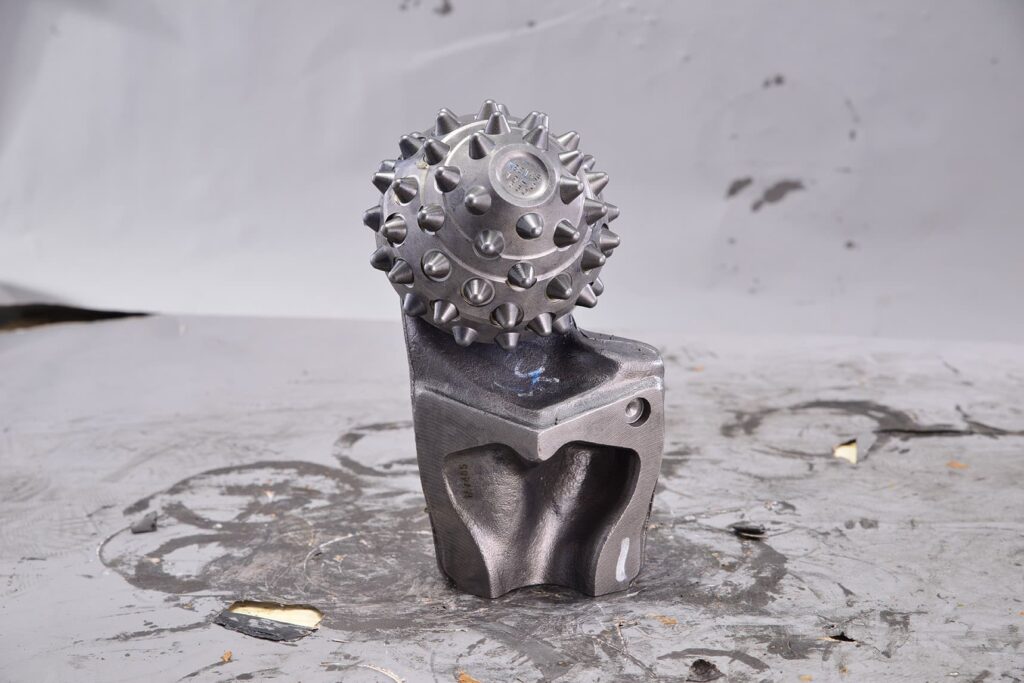
A roller bit is a rotary drilling tool equipped with one or more rotating cones or roller cutting elements. The rollers are fitted with cutting teeth or inserts designed to penetrate and crush rock.
Depending on the design, roller bits can be used for:
- Hard rock drilling
- Foundation drilling
- Large-diameter boreholes
- Quarry and mining applications
- Rock excavation
- Drilling through concrete or highly compacted formations
For foundation projects, roller bits are particularly useful when the drilling tool needs to penetrate rock layers that are too hard for conventional soil augers or buckets.
What Are the Main Components of a Roller Bit?
A roller bit is made up of several key components that work together to transfer drilling force, crush rock, and maintain stable rotation during drilling.
Roller Cones
The roller cones are the primary rotating cutting components of a roller bit. As the drilling string rotates, the cones roll across the bottom of the borehole and apply concentrated force to the rock formation, creating cracks and crushing the surrounding rock.
To withstand continuous impact loads and abrasive drilling conditions, roller cones are typically manufactured from high-strength alloy steel. For hard rock drilling applications, 15MnNi4Mo alloy steel is commonly used due to its excellent toughness, strength, and fatigue resistance. This material helps the cone maintain structural integrity during repeated contact with hard and abrasive formations.
The cone geometry, tooth arrangement, and material properties are selected according to the hardness and abrasiveness of the formation. A properly designed roller cone improves rock penetration efficiency, reduces premature wear, and extends the service life of the roller bit.
Cutting Teeth or Inserts
Cutting teeth are mounted on the roller cones and directly contact the rock during drilling operations.
Depending on the roller bit design and application, the cutting structure may use steel teeth or tungsten carbide inserts. For carbide inserts, materials such as YG11C tungsten carbide are commonly selected due to their high hardness, excellent impact resistance, and good wear performance in hard and abrasive rock formations. The shape, spacing, grade, and arrangement of cutting teeth or inserts directly influence rock penetration efficiency, fragmentation performance, and overall service life of the roller bit.
Bearings
Bearings support the roller cones and allow them to rotate smoothly under drilling loads. Since hard rock drilling generates significant mechanical stress, bearing durability is important for maintaining stable bit performance.
Bit Body
The bit body connects the roller assembly to the drilling equipment and transfers torque and axial drilling force to the cutting structure.
A strong bit body helps withstand repeated loading during demanding drilling operations.
Connection
The connection section allows the roller bit to be installed on the corresponding drilling tool or drilling string. The connection must match the drilling equipment to ensure secure operation and effective force transmission.
How Does a Roller Bit Break Hard Rock?
The working process can be divided into several stages.
1. Applying Drilling Pressure
The drilling rig applies downward pressure to the roller bit as the drilling string rotates.
This force pushes the cutting elements against the rock surface. The amount of applied pressure needs to be appropriate for the formation and bit design.
Too little pressure may result in poor penetration, while excessive pressure can accelerate tooth and bearing wear.
2. Roller Rotation
As the bit rotates, the rollers move across the bottom of the borehole.
The rolling movement continuously changes the contact position between the cutting elements and the rock. Instead of scraping the surface like an auger tooth, the rollers generate concentrated contact forces that help fracture hard formations.
3. Rock Crushing and Fracturing
When the cutting elements press into the rock, localized stress develops beneath the contact points.
Once the stress exceeds the strength of the rock, small cracks begin to form. Continued rotation and drilling pressure cause these cracks to expand, breaking the rock into smaller fragments.
The crushing effect depends on several factors, including:
- Rock hardness
- Rock abrasiveness
- Drilling pressure
- Bit diameter
- Roller design
- Tooth configuration
- Rotation speed
4. Continuous Rock Removal
As the rollers continue rotating, new areas of rock are contacted and crushed.
The drilling system then removes the broken material from the borehole. Continuous removal is important because accumulated rock fragments can reduce cutting efficiency and increase resistance during drilling.
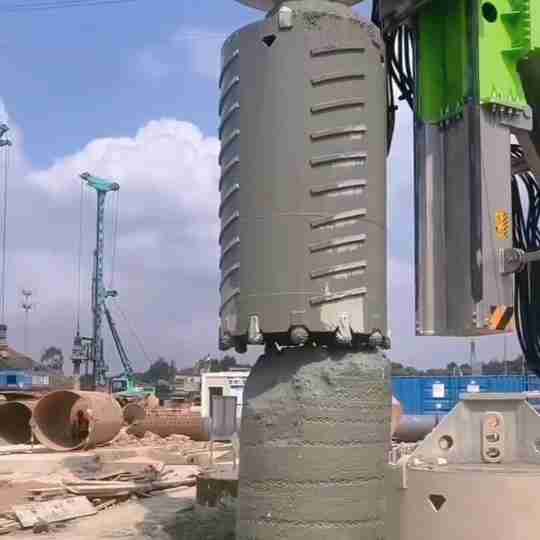
Why Are Roller Bits Effective in Hard Rock?
The main advantage of a roller bit is its ability to transfer concentrated loads to hard formations through rolling contact.
Compared with conventional cutting tools, a roller bit can provide:
High Rock Penetration
Concentrated contact forces help break dense rock formations that are difficult to excavate with standard soil tools.
Controlled Rock Crushing
The cutting elements progressively fracture the formation instead of relying entirely on impact.
Adaptability to Hard Formations
Different roller and tooth configurations can be selected according to rock hardness and abrasiveness.
Continuous Cutting Action
The rotating rollers repeatedly contact fresh areas of the formation during drilling.
What Affects Roller Bit Performance?
Choosing a suitable roller bit is only part of achieving efficient drilling. Actual performance also depends on the interaction between the bit and the drilling conditions.
Rock Hardness and Abrasiveness
Hardness determines how much force is required to fracture the formation, while abrasiveness affects the rate at which cutting elements wear.
Highly abrasive rock may require a more wear-resistant tooth configuration.
Tooth Design
The shape and arrangement of the cutting teeth affect penetration and rock fragmentation.
Different tooth designs can be optimized for softer formations, hard rock, or highly abrasive conditions.
Drilling Pressure
The drilling rig must provide sufficient pressure to maintain effective contact between the rollers and the rock.
However, excessive pressure can increase mechanical stress and accelerate wear.
Rotation Speed
Rotation speed affects how frequently the cutting elements contact the formation.
The optimum speed depends on the bit design, rock characteristics, drilling diameter, and equipment configuration.
Roller Bit Wear in Hard Rock Drilling
Hard rock drilling places significant demands on the cutting elements and internal components of a roller bit.
Common wear conditions include:
- Worn or chipped cutting teeth
- Reduced tooth penetration
- Damaged roller surfaces
- Bearing wear
- Uneven tooth wear
- Reduced drilling efficiency
If penetration decreases while drilling pressure and equipment settings remain unchanged, the bit should be inspected for excessive wear.
Regular inspection helps contractors identify problems before they significantly affect drilling productivity.
When Should You Use a Roller Bit?
A roller bit is generally considered when the formation contains hard or highly compacted material that conventional drilling tools cannot penetrate efficiently.
Typical conditions include:
- Hard rock layers
- Dense limestone
- Sandstone
- Weathered rock
- Fractured rock
- Abrasive formations
For mixed ground conditions, contractors should evaluate the complete geological profile before selecting the drilling tool. A roller bit may be effective in the hard-rock section while other tools may be more suitable for softer overburden.
How to Select a Roller Bit for Hard Rock
The selection should be based on both geological and equipment conditions.
Key factors include:
- Rock hardness and abrasiveness
- Required drilling diameter
- Drilling rig torque and pressure
- Rotation speed
- Tooth configuration
- Expected drilling depth
- Required drilling productivity
Matching the roller bit to the actual formation helps balance penetration rate, tool life, and overall drilling cost.
Roller Bit for Foundation and Rock Drilling
For foundation contractors, roller bits can provide an effective solution when bored piles or other large-diameter drilling operations encounter hard rock formations.
The correct combination of bit diameter, roller design, tooth configuration, drilling pressure, and rotation speed helps maintain stable penetration and reduce unnecessary tool wear.
Frequently Asked Questions(FAQ)
A roller bit is used for drilling through hard and abrasive formations where conventional drilling tools cannot achieve efficient penetration. It is commonly applied in foundation drilling, rock excavation, quarrying, mining, and large-diameter borehole projects.
A roller bit breaks hard rock through a combination of rotation, drilling pressure, and crushing action. The rotating cones apply concentrated loads to the rock surface, creating cracks and fractures that gradually break the formation into smaller fragments.
Roller bits are manufactured using high-strength and wear-resistant materials. The roller cones are commonly made from alloy steel such as 15MnNi4Mo, while cutting inserts often use YG11C tungsten carbide for high hardness and impact resistance. The bit body typically uses structural steels such as Q355B or 42CrMo.
A roller bit is recommended when drilling encounters hard rock, dense limestone, granite, basalt, or highly compacted formations. Augers and drilling buckets are generally more suitable for soil, clay, sand, and softer formations, while roller bits are designed for rock crushing applications.
The correct roller bit selection depends on several factors, including rock hardness, abrasiveness, drilling diameter, rig torque, drilling pressure, rotation speed, and required drilling depth. Matching the roller bit design to the geological conditions helps improve penetration efficiency and extend tool service life.