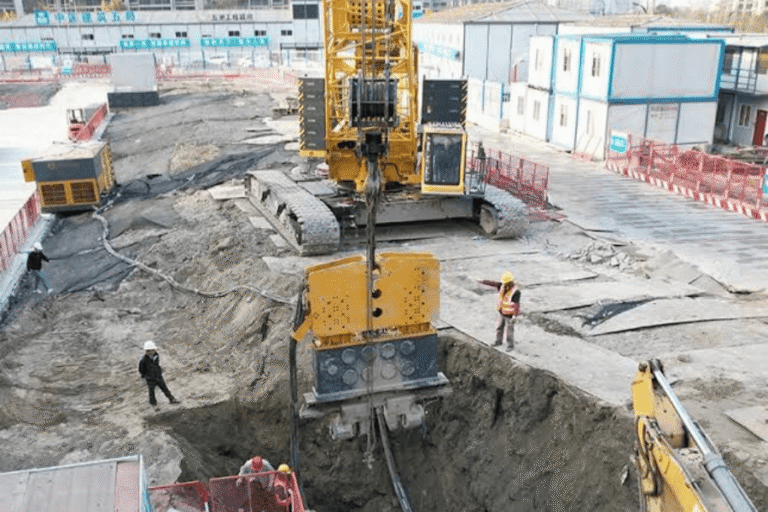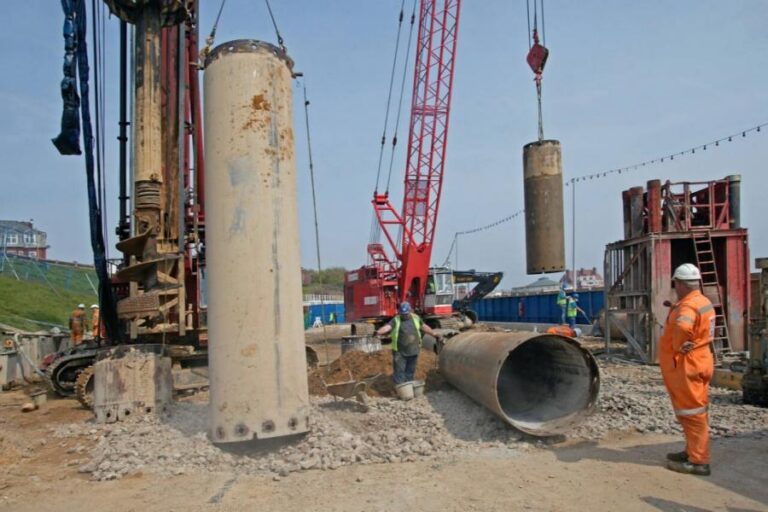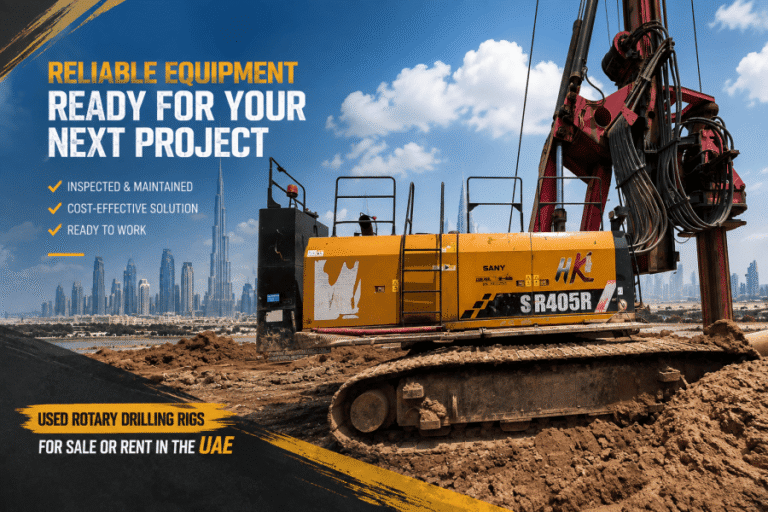

Foundation construction projects demand reliable equipment capable of performing under some of the toughest ground conditions. Whether constructing high-rise buildings, bridges, ports, highways, or industrial facilities, contractors rely on rotary drilling rigs to create deep, stable foundations. While much attention is often given to the drilling rig itself, the performance of the drilling tools plays an equally important role in determining project efficiency.
Among these tools, bullet teeth are one of the most critical wear parts. Although relatively small compared to drilling buckets or Kelly bars, they are directly responsible for cutting, breaking, and penetrating the ground. Their condition has a significant impact on drilling speed, fuel consumption, maintenance costs, and overall project productivity.
Choosing the wrong bullet teeth can result in slower penetration, excessive wear, frequent replacements, increased machine loads, and costly project delays. On the other hand, selecting high-quality teeth designed for specific geological conditions helps contractors improve drilling efficiency while reducing operating costs.
What Are Bullet Teeth?
Bullet teeth are replaceable cutting tools installed on rotary drilling buckets, core barrels, augers, and other drilling attachments. Their primary function is to break, cut, and penetrate soil or rock during foundation drilling.
Unlike welded cutting edges, bullet teeth are removable wear parts. Once worn, they can be replaced individually without changing the entire drilling tool.
This modular design offers several advantages:
- Lower maintenance costs
- Faster replacement
- Less equipment downtime
- Better drilling efficiency
- Higher operational flexibility
Bullet teeth are widely used in:
- Rotary drilling rigs
- Drilling buckets
- Rock buckets
- Soil buckets
- Core barrels
- CFA drilling tools
- Foundation drilling equipment
Today, nearly every modern bored piling contractor relies on replaceable bullet teeth because they maximize productivity while minimizing operating expenses.
Why Bullet Teeth Matter in Foundation Construction
Modern bored piling projects are often carried out in complex geological formations. Contractors may encounter soft clay in one location and hard granite only a few kilometers away. Ground conditions can also change significantly within the same project site.
During drilling, bullet teeth perform the initial cutting action against the formation. Every rotation of the drilling bucket transfers enormous impact and cutting forces to these wear parts.
High-quality bullet teeth provide several important advantages:
- Faster drilling speed
- Reduced drilling resistance
- Lower fuel consumption
- Better bucket penetration
- Longer service life
- Improved drilling accuracy
- Reduced machine vibration
- Lower maintenance costs
Because bullet teeth experience constant friction and impact, they naturally wear over time. However, premium materials and proper heat treatment can significantly extend their lifespan.
For contractors managing multiple drilling rigs, improving bullet tooth performance by just 15–20% can translate into substantial savings over an entire construction project.
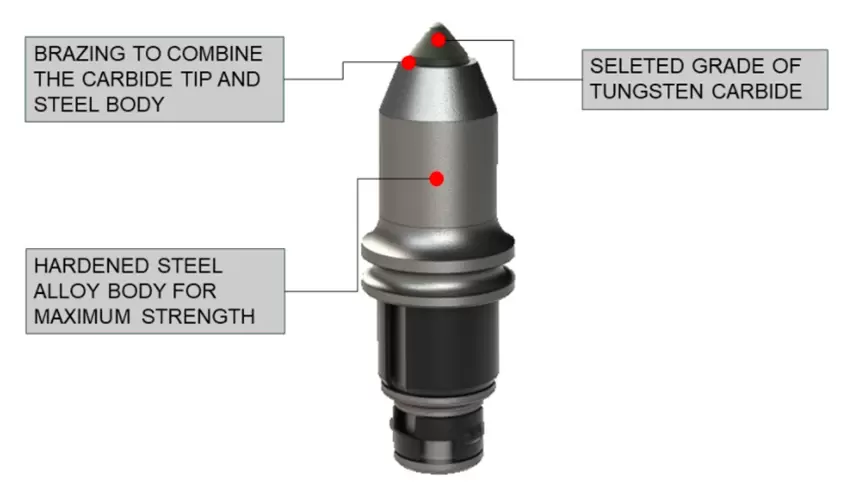
Main Components of a Bullet Tooth
Although compact in size, each bullet tooth is carefully engineered to withstand high-impact drilling conditions.
1. Tungsten Carbide Tip
The carbide tip is the cutting edge of the bullet tooth.
Manufactured from premium tungsten carbide, it offers:
- Extremely high hardness
- Excellent wear resistance
- Superior cutting ability
- Long service life
Because carbide is significantly harder than steel, it maintains a sharp cutting edge even after prolonged drilling.
2. Alloy Steel Body
The tooth body is commonly forged from high-strength alloy steel.
Popular materials include:
- 42CrMo
- 40Cr
- 35CrMo
These materials provide:
- Excellent toughness
- High impact resistance
- Fatigue strength
- Structural stability
The steel body supports the carbide tip while absorbing repeated drilling impacts.
3. Retaining Clip
The retaining clip secures the bullet tooth inside the holder.
Its functions include:
- Preventing accidental tooth loss
- Allowing free tooth rotation
- Simplifying replacement
A properly designed retaining system ensures the tooth rotates naturally during drilling, promoting even wear.
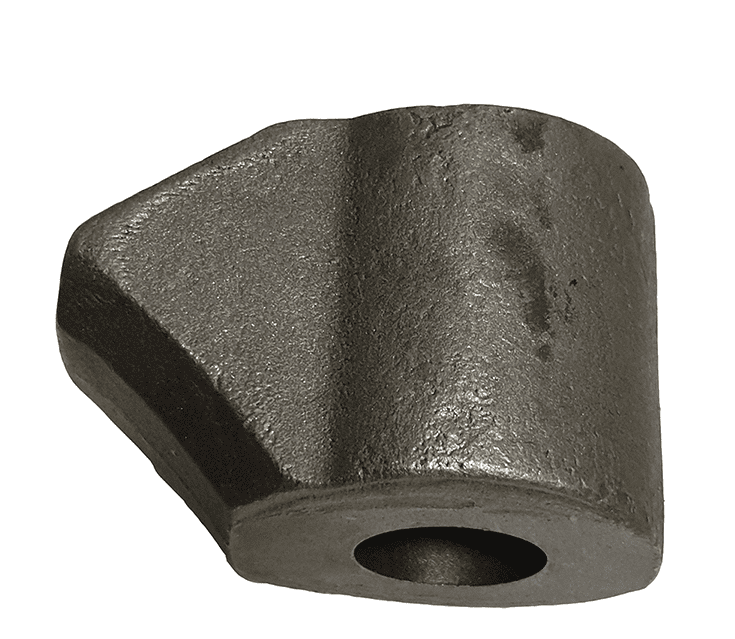
4. Tooth Holder
The holder is welded directly onto the drilling bucket or core barrel.
It serves several important purposes:
- Supports the tooth
- Maintains drilling angle
- Transfers cutting force
- Allows quick replacement
High-quality holders are manufactured from wear-resistant alloy steel to withstand continuous impact.
How Bullet Teeth Work
Bullet teeth operate through a combination of rotation, penetration, crushing, and cutting.
As the rotary drilling rig rotates the drilling bucket, each tooth repeatedly contacts the ground.
The drilling cycle generally follows these steps:
Step 1 – Initial Contact
The carbide tip first contacts the ground surface.
Step 2 – Penetration
The downward force generated by the drilling rig pushes the carbide tip into the soil or rock.
Step 3 – Rock Breaking
In hard formations, the carbide tip creates localized fractures.
Repeated impacts gradually break larger rock masses into smaller fragments.
Step 4 – Soil Cutting
In softer formations such as clay or sand, the teeth cut and loosen material, allowing it to enter the drilling bucket.
Step 5 – Automatic Rotation
As friction develops, properly installed bullet teeth rotate inside their holders.
This self-rotation distributes wear evenly around the carbide tip, greatly extending service life.
Step 6 – Material Collection
The loosened soil or rock fragments are collected by the drilling bucket and lifted from the borehole.
This cycle repeats continuously throughout the drilling process.
Common Types of Bullet Teeth
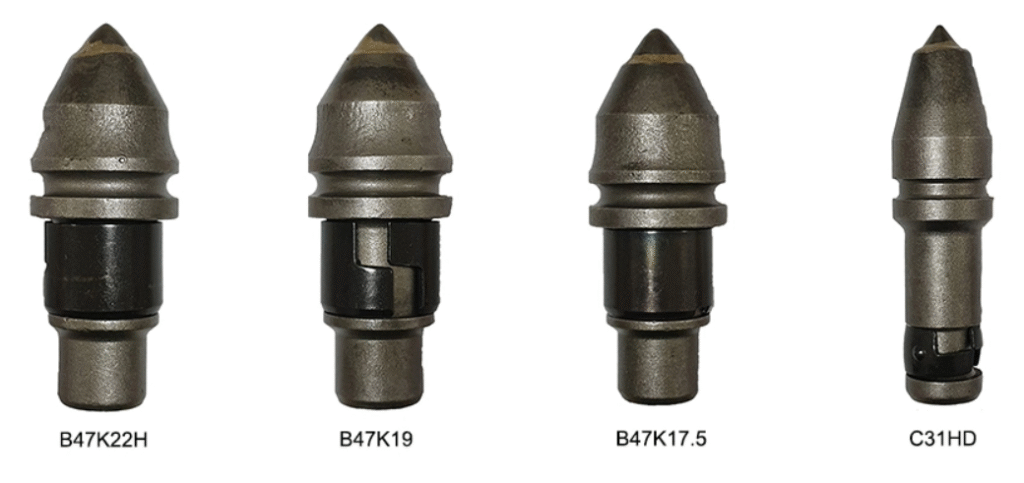
Bullet teeth are selected according to the geological conditions encountered on site.
| Ground Condition | Recommended Model |
|---|---|
| Clay & Soft Soil | C31HD |
| Mixed Ground | B47K17.5 |
| Gravel & Weathered Rock | B47K19 |
| Hard Rock & Granite | B47K22H |
B47K22H Bullet Teeth
The B47K22H is designed for the most demanding drilling applications. With a large tungsten carbide tip and reinforced steel body, it delivers excellent performance in highly abrasive rock formations.
Best Applications
- Granite
- Basalt
- Limestone
- Hard sandstone
- Large boulders
Advantages
- Excellent wear resistance
- High impact strength
- Longer replacement intervals
- Suitable for heavy-duty drilling
This model is commonly installed on heavy-duty rock augers and core barrels used for deep foundation construction.
B47K19 Bullet Teeth
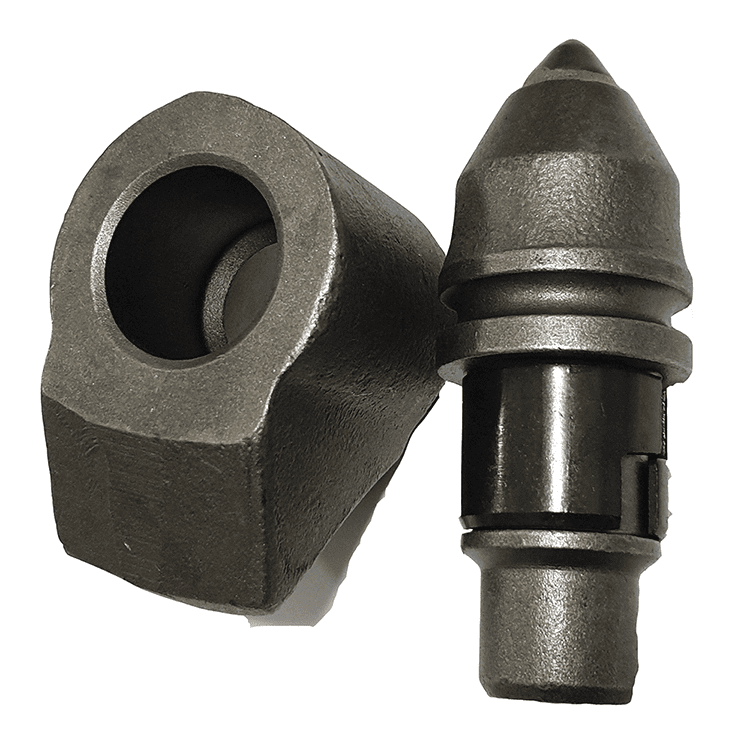
The B47K19 offers an excellent balance between durability and drilling efficiency. It is one of the most versatile models used in foundation drilling.
Best Applications
- Weathered rock
- Gravel
- Mixed formations
- Medium-hard rock
Advantages
- Stable cutting performance
- Good penetration speed
- Cost-effective operation
- Wide compatibility with drilling tools
Many contractors choose the B47K19 for projects involving varying ground conditions because it provides consistent performance without frequent replacement.
B47K17.5 Bullet Teeth
The B47K17.5 is ideal for medium-strength formations where high drilling speed is more important than maximum wear resistance.
Best Applications
- Clay
- Sand
- Gravel
- Weathered sandstone
Advantages
- Fast penetration
- Reduced drilling resistance
- Lower operating costs
- Smooth drilling performance
It is commonly used on drilling buckets and straight augers for bored pile construction.
C31HD Bullet Teeth
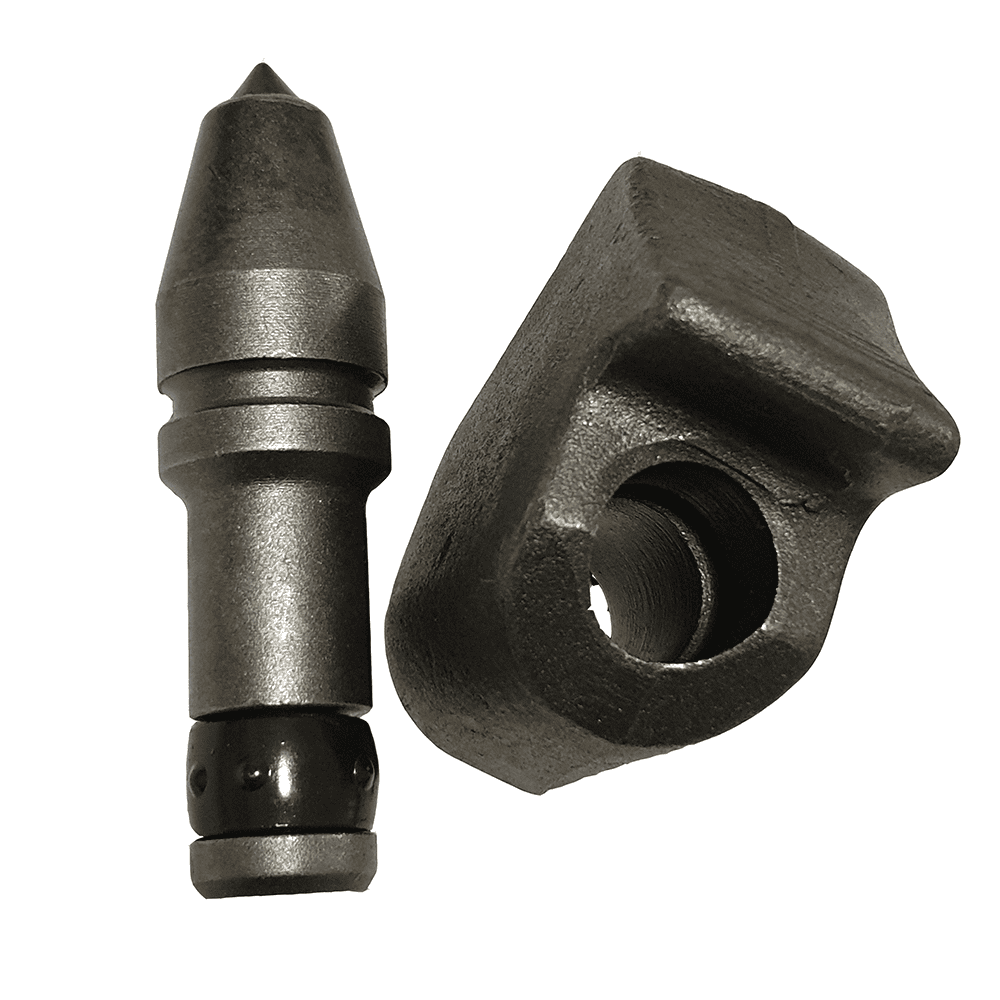
Unlike the B47 series, the C31HD is designed for lighter drilling conditions while maintaining excellent durability.
Best Applications
- Clay
- Soft soil
- Sand
- Loose gravel
- Soil stabilization
Advantages
- High cutting efficiency
- Excellent value for money
- Easy replacement
- Reliable performance in soft formations
C31HD teeth are widely used in augers, trenching equipment, and foundation drilling tools operating in non-abrasive soils.
| Model | Ground Conditions | Typical Applications | Main Advantages |
|---|---|---|---|
| B47K22H | Hard rock, granite, basalt | Rock augers, core barrels, drilling buckets | Maximum wear resistance and high impact strength |
| B47K19 | Weathered rock, gravel, mixed ground | Rotary drilling tools, drilling buckets | Excellent balance of durability and drilling efficiency |
| B47K17.5 | Clay, sandstone, soft to medium rock | Straight augers, drilling buckets | Fast penetration with lower drilling resistance |
| C31HD | Clay, sand, loose gravel | Augers, trenching tools, soil drilling | High cutting efficiency and cost-effective performance |
Materials Used in High-Quality Bullet Teeth
Material quality is one of the biggest factors affecting bullet tooth performance.
Low-cost products often fail because manufacturers use inferior steel or poor-quality carbide.
Professional foundation contractors should understand the most common materials.
Tungsten Carbide
The carbide tip performs the actual cutting.
Premium tungsten carbide offers:
- Exceptional hardness
- Excellent abrasion resistance
- High compressive strength
- Long wear life
High-density carbide grades generally outperform cheaper alternatives, especially in hard rock drilling.
Alloy Steel
The tooth body requires a balance between hardness and toughness.
Premium manufacturers typically use forged alloy steels such as:
- 42CrMo
- 40Cr
- 35CrMo
These steels provide excellent mechanical properties after heat treatment.
Heat Treatment
Heat treatment is just as important as raw materials.
A controlled heat treatment process improves:
- Surface hardness
- Core toughness
- Fatigue resistance
- Crack resistance
- Wear resistance
Without proper heat treatment, even high-quality steel can fail prematurely.
Manufacturers that maintain strict quality control throughout production are more likely to deliver products with consistent performance and longer service life.
Applications of Bullet Teeth in Bored Piling Projects
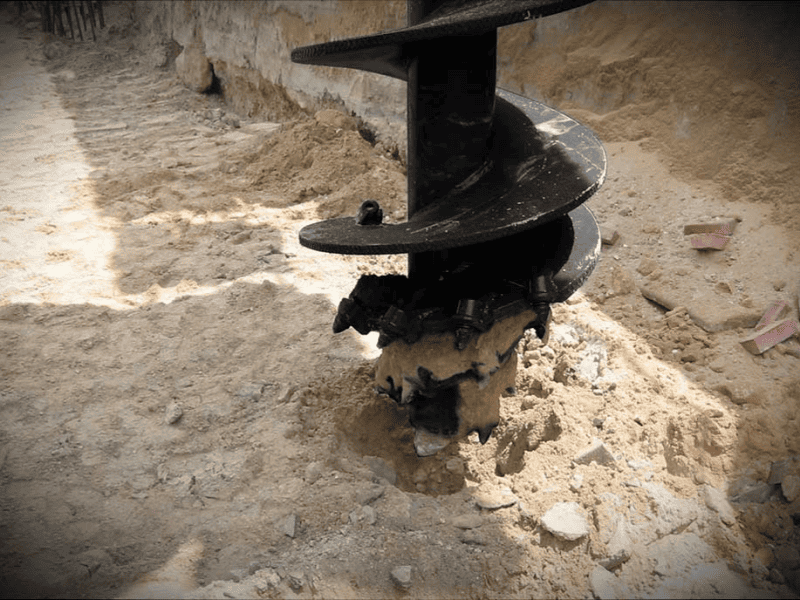
Bullet teeth are used across a wide range of foundation construction applications. They are compatible with various drilling tools and ground conditions, making them indispensable wear parts on modern rotary drilling rigs.
Common applications include:
- Bored pile foundations
- High-rise building construction
- Bridge and highway foundations
- Metro and railway projects
- Wind turbine foundations
- Marine and port engineering
- Industrial plant construction
- Water conservancy projects
- Retaining wall construction
- Deep foundation drilling
Different drilling tools require different bullet tooth configurations. For example, soil buckets typically use teeth designed for fast cutting in loose formations, while rock buckets and core barrels require heavy-duty teeth capable of withstanding high impact loads.
Choosing the Right Bullet Teeth for Different Ground Conditions
Selecting the correct bullet teeth starts with understanding the geological conditions of the project. Different formations require different cutting designs, carbide sizes, and wear resistance levels. Using the wrong tooth type can lead to faster wear, reduced drilling efficiency, and increased operating costs.
The most commonly used models for bored piling applications include C31HD, B47K17.5, B47K19, and B47K22H, each designed for different ground conditions.
Soft Clay and Silt
Soft clay, silt, sand, and loose soil require bullet teeth that prioritize fast cutting performance and efficient spoil removal rather than maximum impact resistance.
Recommended Bullet Teeth:
C31HD Bullet Teeth
Suitable for:
- Clay
- Soft soil
- Sand
- Loose gravel
Key advantages:
- Efficient soil cutting
- Good penetration speed
- Lower drilling resistance
- Cost-effective performance
B47K17.5 Bullet Teeth can also be used in compact soil and mixed formations where slightly higher wear resistance is required.
Using heavy-duty rock teeth such as B47K22H in soft soil conditions may increase drilling resistance and reduce productivity.
Gravel and Cobbles
Gravel and cobble formations create both abrasive wear and impact loads on drilling tools. Bullet teeth must provide a balance between penetration ability and impact resistance.
Recommended Bullet Teeth:
B47K17.5 Bullet Teeth
Suitable for:
- Gravel
- Compact soil
- Soft rock layers
Features:
- Good penetration efficiency
- Reliable carbide performance
- Balanced wear resistance
B47K19 Bullet Teeth
Recommended for more abrasive gravel and mixed formations where additional durability is required.
Features:
- Larger carbide tip
- Strong alloy steel body
- Improved impact resistance
Using soil-focused teeth in gravel formations can result in premature carbide damage and increased replacement frequency.
Mixed Ground
Mixed formations containing clay, gravel, sand, and weathered rock are common in urban foundation projects. These conditions require versatile bullet teeth that can handle changing ground conditions.
Recommended Bullet Teeth:
B47K19 Bullet Teeth
Ideal for:
- Mixed ground
- Gravel with rock layers
- Weathered formations
Advantages:
- Excellent balance between penetration and wear resistance
- Stable drilling performance
- Suitable for various rotary drilling applications
B47K17.5 Bullet Teeth are also suitable for softer mixed ground where faster penetration is preferred.
Weathered Rock
Weathered rock is harder than normal soil but generally less abrasive than solid bedrock. The selected bullet teeth should provide higher strength and improved wear resistance.
Recommended Bullet Teeth:
B47K19 Bullet Teeth
Suitable for:
- Weathered granite
- Weathered sandstone
- Fractured rock
Features:
- Medium-large tungsten carbide tip
- High-strength alloy steel body
- Excellent fatigue resistance
- Stable cutting performance
For harder weathered rock conditions, B47K22H can provide longer service life and improved impact resistance.
Hard Rock
Hard rock formations such as granite, basalt, limestone, and hard sandstone require heavy-duty bullet teeth designed for maximum impact and wear resistance.
Recommended Bullet Teeth:
B47K22H Bullet Teeth
Designed for:
- Granite
- Basalt
- Limestone
- Hard rock formations
- Large boulders
Key features:
- Large tungsten carbide insert
- Heavy-duty alloy steel body
- Maximum wear resistance
- Superior impact strength
- Excellent rock penetration capability
Although B47K22H bullet teeth have a higher initial cost compared with standard models, they significantly reduce replacement frequency and improve drilling efficiency in demanding rock conditions.ons.
Compatibility with Rotary Drilling Tools
Choosing the right bullet tooth is not only based on ground conditions. The drilling tool type also plays an important role in determining the most suitable tooth model. Different drilling tools experience different levels of impact, abrasion, and cutting resistance, requiring specific bullet teeth for optimal performance.
| Ground Type | Recommended Model | Wear Resistance | Penetration Speed |
|---|---|---|---|
| Clay | C31HD | ★★★☆☆ | ★★★★★ |
| Sand | C31HD | ★★★☆☆ | ★★★★★ |
| Gravel | B47K17.5 | ★★★★☆ | ★★★★☆ |
| Weathered Rock | B47K19 | ★★★★★ | ★★★★☆ |
| Limestone | B47K19 | ★★★★★ | ★★★☆☆ |
| Granite | B47K22H | ★★★★★ | ★★★☆☆ |
| Basalt | B47K22H | ★★★★★ | ★★★☆☆ |
Soil Buckets
Soil buckets are mainly used for drilling in softer formations such as clay, sand, silt, and loose gravel. These applications require teeth with good cutting efficiency and fast penetration rather than maximum impact resistance.
Recommended bullet teeth:
- C31HD – Ideal for clay, sand, and loose soil conditions
- B47K17.5 – Suitable for mixed soil and soft to medium formations
Rock Buckets
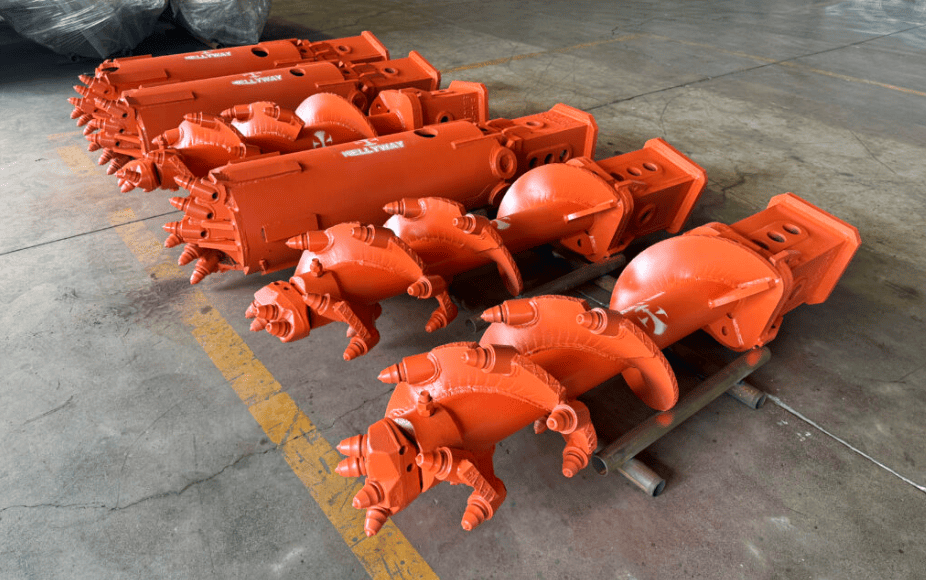
Rock buckets are designed for challenging ground conditions, including weathered rock, hard rock, and fractured formations. They require bullet teeth with higher wear resistance and impact strength.
Recommended bullet teeth:
- B47K22H – Best choice for hard rock, granite, basalt, and highly abrasive formations
- B47K19 – Suitable for weathered rock, gravel, and mixed ground conditions
Core Barrels
Core barrels are commonly used for rock coring applications where drilling tools experience high impact loads and continuous contact with abrasive rock formations.
They require:
- High-strength alloy steel construction
- Reinforced tooth holders
- Wear-resistant tungsten carbide tips
Recommended bullet teeth:
- B47K22H – For hard rock and large boulder drilling
- B47K19 – For fractured rock and mixed geological conditions
Continuous Flight Augers (CFA)
Continuous Flight Auger (CFA) tools require reliable cutting performance during continuous drilling operations. The selected teeth should provide stable penetration while reducing wear during long working cycles.
Recommended bullet teeth:
- C31HD – Suitable for soil, clay, and soft formations
- B47K17.5 – Suitable for compact soil and mixed ground conditions
How Premium Bullet Teeth Reduce Project Costs
Although premium bullet teeth require a higher initial investment, they often provide a much lower total cost of ownership.
Benefits include:
Longer Service Life
Higher-quality carbide and alloy steel reduce replacement frequency.
Faster Drilling
Sharper cutting edges improve penetration rates.
Lower Fuel Consumption
Reduced drilling resistance decreases machine load and fuel usage.
Less Equipment Downtime
Fewer replacements mean higher equipment utilization.
Improved Productivity
Higher drilling efficiency enables contractors to complete more piles within the same project schedule.
How to Choose a Reliable Bullet Teeth Supplier
A trusted supplier offers more than just competitive pricing.
Key evaluation factors include:
Manufacturing Experience
Look for suppliers specializing in foundation drilling tools with years of production expertise.
Material Quality
Ask about:
- Alloy steel grade
- Tungsten carbide quality
- Heat treatment process
Manufacturing Capability
Professional factories should provide:
- Precision forging
- CNC machining
- Automated heat treatment
- Strict quality inspection
Product Compatibility
Ensure the supplier can manufacture teeth compatible with major rotary drilling rig brands, including:
- Bauer
- SANY
- XCMG
- Zoomlion
- Soilmec
- Casagrande
- Sunward
OEM & Customization
Custom sizes and holder configurations allow contractors to match existing drilling tools without modification.
Technical Support
Experienced suppliers can recommend suitable tooth models based on geological conditions and drilling applications.
Why Foundation Contractors Choose Rockway
For contractors across the Middle East and international markets, selecting dependable drilling tools is essential for maintaining productivity and controlling project costs.
Rockway supplies a comprehensive range of bullet teeth, drilling buckets, core barrels, Kelly bars, augers, and other rotary drilling tools designed for demanding foundation construction projects.
Our products feature:
- Premium alloy steel construction
- High-quality tungsten carbide inserts
- Precision forging and heat treatment
- Excellent wear resistance
- Compatibility with leading rotary drilling rig brands
- Custom manufacturing options
- Reliable quality control
Whether your project involves soft clay, mixed ground, weathered rock, or hard rock, choosing the right drilling tools helps maximize equipment performance and minimize downtime.
Frequently Asked Questions (FAQ)
The correct bullet teeth depend mainly on the geological conditions and drilling tool type. For soft soil and clay, C31HD provides efficient cutting performance. For mixed ground and weathered rock, B47K17.5 and B47K19 offer a good balance between penetration and wear resistance. For hard rock and boulders, B47K22H is recommended due to its larger tungsten carbide tip and higher impact strength.
The main differences are carbide tip size, wear resistance, and application range:
B47K22H – Designed for hard rock, granite, basalt, and large boulders with maximum wear resistance.
B47K19 – Suitable for weathered rock, gravel, and mixed ground conditions.
B47K17.5 – Ideal for clay, sandstone, gravel, and medium-strength formations requiring faster penetration.
C31HD – Best suited for soft soil, clay, sand, and non-abrasive drilling conditions.
For core barrels and rock buckets working in demanding geological conditions, B47K22H and B47K19 are commonly recommended. B47K22H is preferred for hard rock and boulder drilling, while B47K19 performs well in weathered rock and mixed formations.
The service life of bullet teeth depends on several factors, including ground conditions, drilling tool design, machine torque, operator experience, and maintenance practices. Hard rock applications generally cause faster wear than soil drilling. Selecting the correct model, such as B47K22H for rock or C31HD for soil, can significantly extend tooth life.
Yes. Rockway supplies bullet teeth compatible with many commonly used foundation drilling tools and rotary drilling rigs. Our teeth are designed for applications including drilling buckets, rock buckets, core barrels, augers, and CFA tools, with models such as B47K22H, B47K19, B47K17.5, and C31HD available for different drilling requirements.