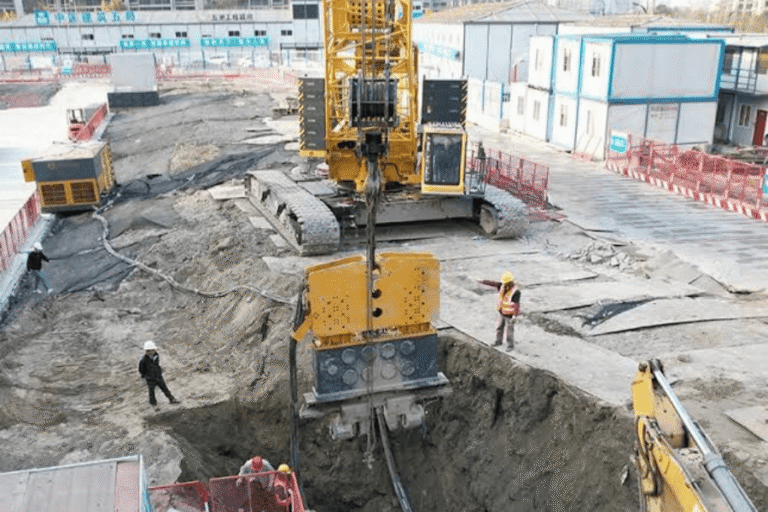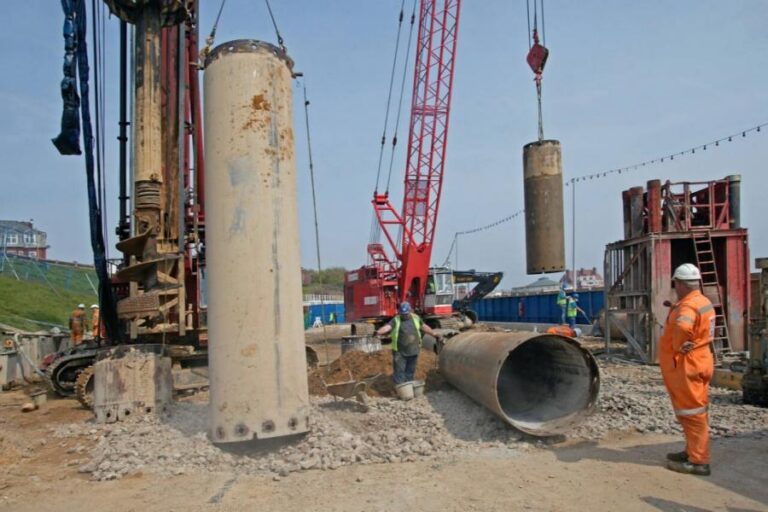

Bored pile construction is widely applied in foundation projects that require high load capacity and long-term structural stability. After a bored pile is installed, the upper concrete section usually contains weaker material, laitance, impurities, and excess concrete caused by the pouring process. This section needs to be removed before the pile is connected with the foundation structure.
Traditional pile breaking methods often rely on manual breakers and handheld tools to remove excess concrete. Although this method can work for small projects, it requires more labor, takes longer, and may cause damage to reinforcement bars inside the pile.
A pile breaker, especially a hydraulic pile breaker, provides a more controlled method for removing unwanted concrete from the pile head. It uses hydraulic pressure to apply controlled force around the pile head, allowing the unwanted concrete section to be removed while maintaining the condition of the reinforcement cage and the remaining pile structure.
Understanding how a hydraulic pile breaker works helps contractors select suitable equipment and improve efficiency in bored pile projects.
What Is a Pile Breaker?
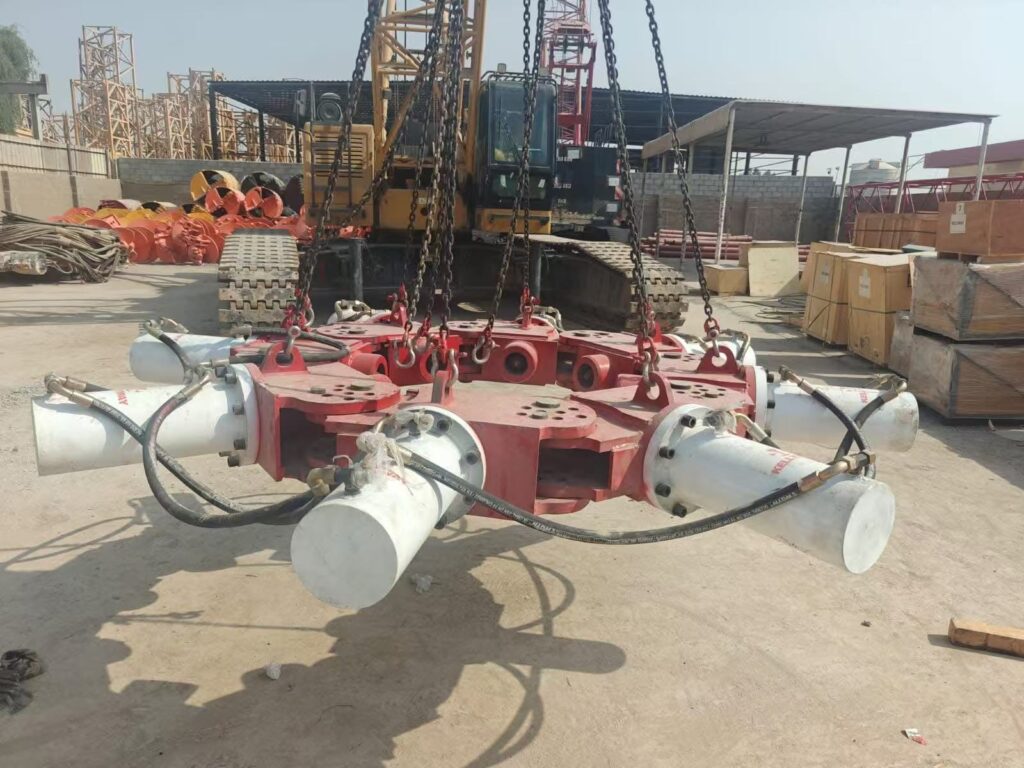
A pile breaker, also known as a pile cutting machine or hydraulic pile crusher, is a construction attachment used to remove the upper concrete section of bored piles, diaphragm walls, and other concrete foundation elements.
A hydraulic pile breaker normally consists of multiple hydraulic cylinders, breaking modules, connecting pins, frames, and wear-resistant components. The modules are installed around the pile according to the required diameter and powered by an excavator hydraulic system or separate hydraulic station.
Different from traditional impact breaking tools, hydraulic pile breakers do not depend on repeated hammering force. Instead, the cylinders generate evenly distributed pressure around the pile circumference. The internal stress created by this pressure causes the concrete to crack and separate.
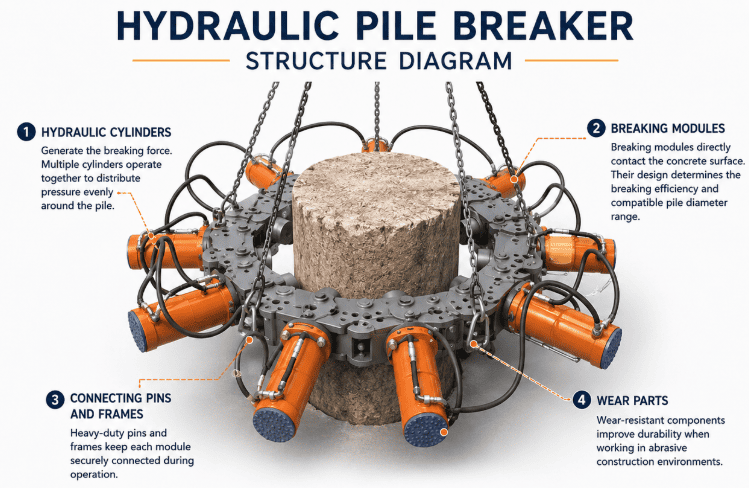
Main Components of a Hydraulic Pile Breaker
Hydraulic Cylinders
Hydraulic cylinders generate the breaking force. Multiple cylinders operate together to distribute pressure evenly around the pile.
Breaking Modules
Breaking modules directly contact the concrete surface. Their design determines the breaking efficiency and compatible pile diameter range.
Connecting Pins and Frames
Heavy-duty pins and frames keep each module securely connected during operation.
Wear Parts
Wear-resistant components improve durability when working in abrasive construction environments.
Why Is Pile Breaking Required in Bored Pile Construction?
During bored pile installation, concrete is usually poured above the final designed pile elevation. This additional concrete height is called the pile head allowance.
The extra section ensures that the pile reaches the required quality after removing the upper concrete layer, which may contain weaker material.
Pile breaking is required for several reasons:
- Remove concrete containing laitance and impurities
- Achieve the designed pile elevation
- Expose reinforcement bars for pile cap connection
- Prepare the pile head for structural integration
A properly prepared pile head creates a stronger connection between the pile and the pile cap or foundation structure.
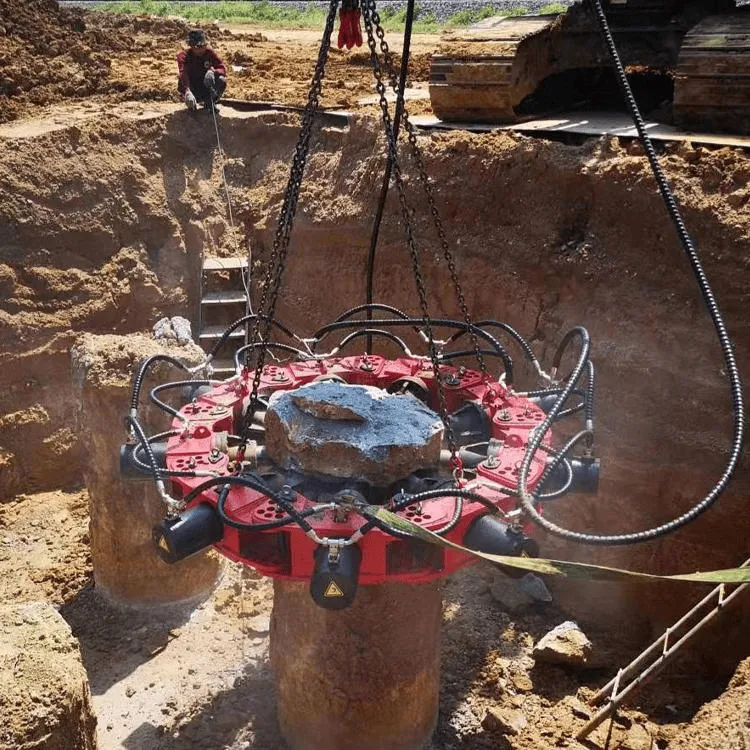
How Does a Pile Breaker Work?
The operation process of a hydraulic pile breaker generally includes four main steps: positioning the equipment, applying hydraulic pressure, creating controlled cracks inside the concrete, and removing the separated pile head section.
Unlike traditional pile breaking methods that rely on manual impact, a hydraulic pile breaker uses multiple hydraulic cylinders to generate evenly distributed pressure around the pile. This allows contractors to remove excess concrete efficiently while reducing the risk of damaging the reinforcement cage and the remaining pile structure.
1. Positioning the Pile Breaker
Before breaking begins, the contractor selects a suitable pile breaker model according to the pile diameter, concrete strength, and project requirements.
Different bored pile diameters require different breaker sizes to ensure proper contact between the breaking modules and the pile surface.
Common bored pile diameters include:
- 600 mm
- 800 mm
- 1000 mm
- 1200 mm
- 1500 mm
- Custom larger diameters
After selecting the correct model, the pile breaker modules are assembled around the exposed pile head. Each module is positioned evenly to ensure that the hydraulic force can be distributed around the entire circumference of the pile.
Proper positioning is important because uneven contact may result in irregular cracking and reduce breaking efficiency.
Before operation, operators usually check:
- Connection between modules
- Hydraulic hose condition
- Cylinder movement
- Contact position between breaker and concrete pile
Once the equipment is correctly installed, the hydraulic system can begin applying pressure.
2. Hydraulic Cylinder Pressurization
After installation, hydraulic oil enters the cylinders and generates pushing force.
The hydraulic cylinders drive the breaking modules inward, creating radial pressure around the concrete pile. Multiple cylinders work simultaneously to apply balanced force from different directions.
Compared with impact equipment, hydraulic pile breakers use compression force rather than repeated hammering. The pressure is transferred into the concrete structure, creating internal stress that gradually weakens the connection between the unwanted concrete section and the main pile body.
This controlled force helps reduce unnecessary damage to:
- Reinforcement bars
- Remaining concrete structure
- Nearby piles
- Surrounding construction areas
The hydraulic system also allows operators to control the breaking process according to actual site conditions, such as pile diameter and concrete strength.
3. Concrete Cracking Process
As hydraulic pressure continues to increase, cracks gradually develop inside the concrete section.
The distributed pressure creates a controlled fracture line around the pile head. Instead of breaking the concrete randomly from the outside, the pile breaker separates the upper section through internal cracking.
When the concrete reaches the required separation level, the unwanted pile head section becomes loose and can be removed.
Compared with manual breaking methods, this process offers several advantages:
- More consistent breaking results
- Reduced vibration during operation
- Lower risk of reinforcement damage
- Faster pile head preparation
The controlled cracking process is especially valuable for large foundation projects where hundreds or thousands of bored piles need to be processed.
4. Removing the Broken Concrete Section
After the concrete section is separated, excavators or lifting equipment are used to remove the broken concrete pieces from the pile head.
The remaining pile surface is then cleaned and inspected to confirm that it meets project requirements before the next construction stage.
Typical follow-up work includes:
- Pile cap installation
- Foundation connection
- Reinforcement preparation
- Concrete surface inspection
In large-scale foundation projects, efficient pile head removal helps maintain the overall construction schedule and ensures that the completed pile system meets design requirements.
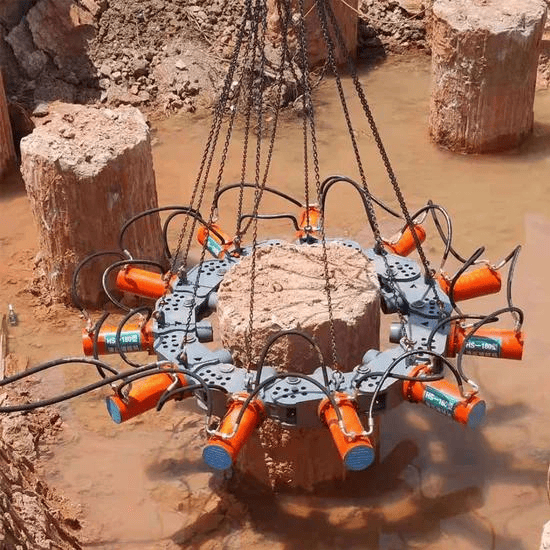
Advantages of Using a Hydraulic Pile Breaker
Higher Working Efficiency
Hydraulic pile breakers can process multiple pile heads within a shorter working period compared with manual breaking methods.
This makes them suitable for foundation projects involving large numbers of bored piles.
Better Protection of Reinforcement
Manual breaking may create uncontrolled impact force that can affect reinforcement bars.
Hydraulic pressure allows operators to control the breaking process and reduce unnecessary damage.
Reduced Labor Requirements
Traditional pile breaking usually requires several workers using handheld equipment.
A hydraulic pile breaker can be installed on construction machinery, reducing manual work and improving productivity on site.
Lower Construction Impact
Hydraulic pile breakers create controlled cracking instead of continuous hammering.
This helps reduce vibration and creates a cleaner working environment.
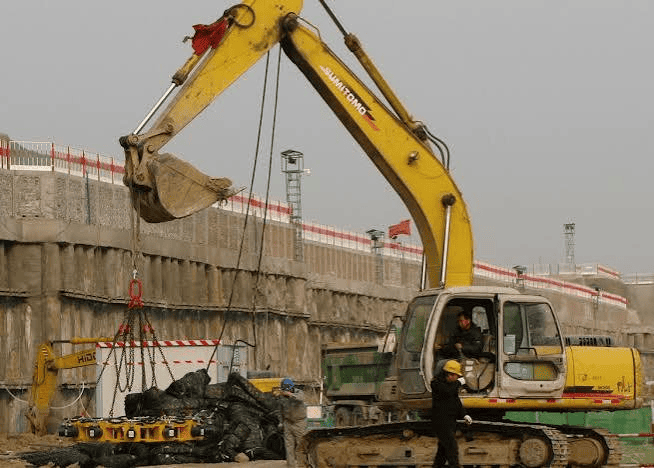
Applications of Hydraulic Pile Breakers
Hydraulic pile breakers are used in various foundation projects.
Building Foundations
High-rise buildings often require bored pile foundations. Pile breakers prepare pile heads before connection with foundation structures.
Bridge Construction
Bridge foundations commonly use large-diameter bored piles. Hydraulic pile breakers help remove excess concrete efficiently.
Metro and Infrastructure Projects
Large infrastructure projects require consistent pile preparation methods to maintain construction schedules.
Industrial Facilities
Factories, power plants, and heavy structures often use bored piles where accurate pile head preparation is required.
How to Choose the Right Pile Breaker?
Selecting the correct pile breaker depends on several project conditions.
Pile Diameter
The breaker size should match the bored pile diameter.
An unsuitable model may reduce breaking efficiency or affect the final pile preparation quality.
Concrete Strength
Higher concrete strength may require equipment with greater hydraulic capacity.
Project Volume
Large foundation projects usually require equipment with higher productivity to handle a large number of piles.
Excavator Compatibility
The hydraulic flow and working pressure should match the carrier machine specifications.
Hydraulic Pile Breaker vs Traditional Pile Breaking Methods
| Item | Hydraulic Pile Breaker | Traditional Manual Breaking |
|---|---|---|
| Working Method | Hydraulic compression | Manual impact |
| Efficiency | High | Low |
| Labor Requirement | Lower | Higher |
| Damage Risk | Lower | Higher |
| Suitable Projects | Large foundation projects | Small projects |
| Working Consistency | Stable | Depends on operator skill |
Maintenance Tips for Hydraulic Pile Breakers
Regular maintenance helps keep hydraulic pile breakers operating efficiently.
Recommended practices include:
- Check hydraulic cylinders before operation
- Inspect breaking modules and wear parts
- Remove concrete residue after use
- Lubricate moving components regularly
- Replace damaged parts when required
- Store equipment in a dry environment
Routine inspection reduces unexpected downtime and extends equipment service life.
Hydraulic Pile Breakers for Foundation Projects
Hydraulic pile breakers offer a controlled method for removing excess concrete from bored pile heads. By applying balanced hydraulic pressure around the pile, the equipment separates unwanted concrete while maintaining reinforcement integrity.
For contractors handling bored piling, bridge foundations, and large infrastructure projects, hydraulic pile breakers help improve construction efficiency and maintain consistent pile preparation quality.
Rockway supplies hydraulic pile breakers for bored pile construction, supporting foundation contractors with durable equipment solutions for projects worldwide.
Frequently Asked Questions (FAQ)
A pile breaker is used to remove the excess concrete section from bored pile heads after concrete pouring. It helps expose reinforcement bars, achieve the required pile elevation, and prepare the pile head for connection with pile caps or foundation structures.
A hydraulic pile breaker works by using hydraulic cylinders to apply evenly distributed pressure around the pile head. The pressure creates internal cracks inside the concrete, allowing the unwanted upper section to be separated without excessive impact on the reinforcement cage.
Hydraulic pile breakers are available for different bored pile diameters, including 600 mm, 800 mm, 1000 mm, 1200 mm, 1500 mm, and larger customized sizes. The suitable model depends on the pile diameter and project requirements.
A hydraulic pile breaker offers higher working efficiency, requires less manual labor, reduces vibration, and provides better protection for reinforcement bars. It is especially suitable for large foundation projects involving a large number of bored piles.
The selection of a hydraulic pile breaker depends on several factors, including bored pile diameter, concrete strength, excavator hydraulic specifications, and project volume. Choosing the correct model ensures better breaking performance and longer equipment service life.