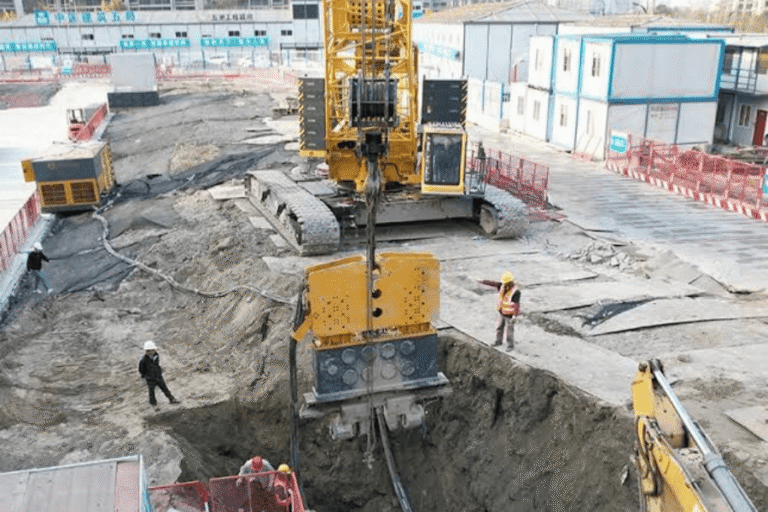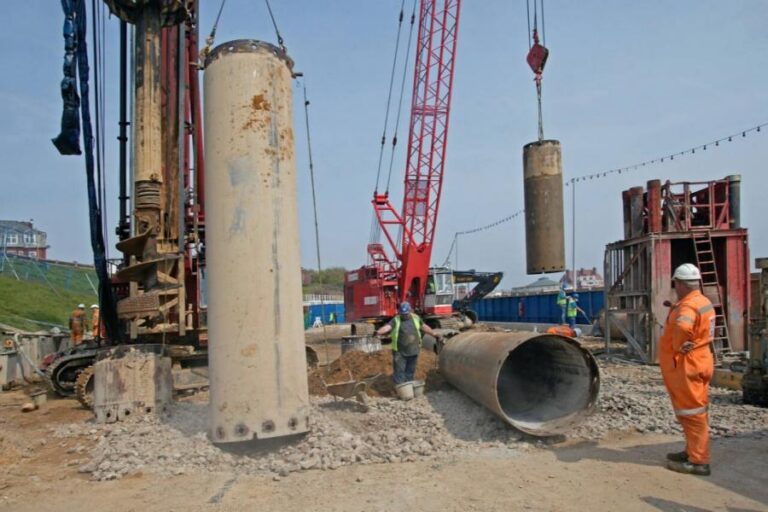

Concrete placement is one of the most important stages in bored pile construction. Even when drilling, reinforcement installation, and slurry control have been completed correctly, improper concrete placement can reduce pile quality and affect the structural performance of the foundation.
The tremie method has become the standard solution for placing concrete into deep drilled shafts filled with drilling slurry or groundwater. A properly assembled tremie pipe system allows fresh concrete to flow continuously from the bottom of the pile upward while preventing segregation and contamination.
This guide explains how tremie pipes work, their components, common specifications, installation procedures, and the factors that influence concrete placement quality.
What Is a Tremie Pipe?
A tremie pipe is a vertical steel pipe used to place concrete into drilled foundations where direct pouring is not possible. It transfers concrete from the hopper at ground level to the bottom of the borehole, allowing concrete to displace slurry or water without excessive mixing.
The tremie method is widely used in:
- Bored pile foundations
- Bridge foundations
- Diaphragm walls
- Deep foundation construction
- Marine structures
- Caisson foundations
Unlike open pouring, the tremie system keeps the discharge point below the concrete surface throughout the placement process. This helps maintain concrete integrity and reduces the risk of segregation.
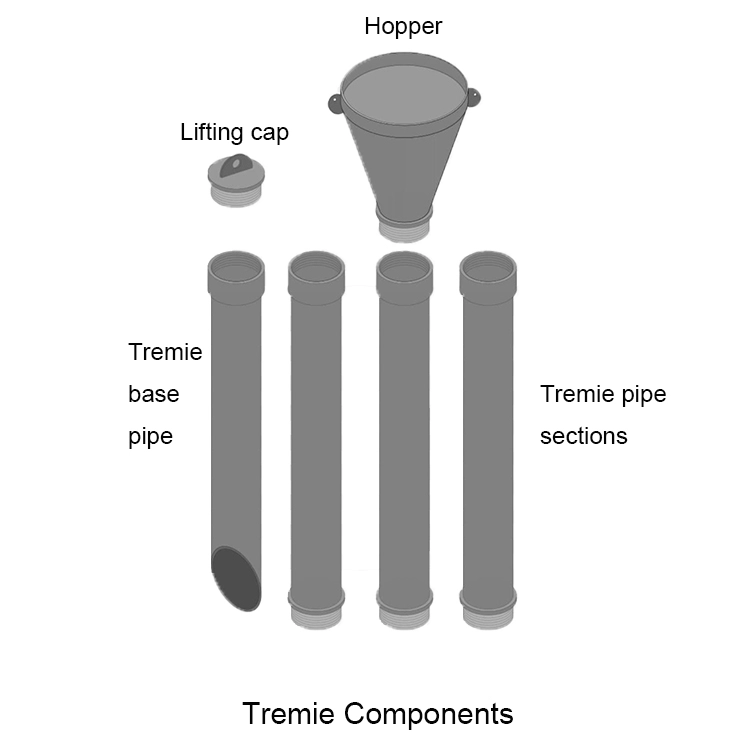
Main Components of a Tremie Pipe System
A tremie pipe system consists of several key components that work together to ensure smooth and reliable concrete placement during bored pile construction.
Lifting Cap
The lifting cap is installed at the top of the tremie pipe and provides a secure connection point for crane lifting. It helps operators safely install, extend, and remove pipe sections during concrete placement.
Main functions:
- Safe lifting and handling
- Supporting pipe assembly
- Maintaining alignment during operation
Hopper
The hopper is located at the top of the tremie system and receives fresh concrete from the concrete pump or mixer truck. It guides concrete into the tremie pipe and helps maintain continuous flow during pouring.
Main functions:
- Receiving concrete
- Improving concrete flow
- Reducing interruptions during placement
Tremie Base Pipe
The tremie base pipe is the bottom section of the system and delivers concrete directly into the bottom of the borehole. It is designed to withstand higher wear during operation.
Main functions:
- Delivering concrete to the pile bottom
- Preventing slurry contamination
- Supporting stable concrete placement
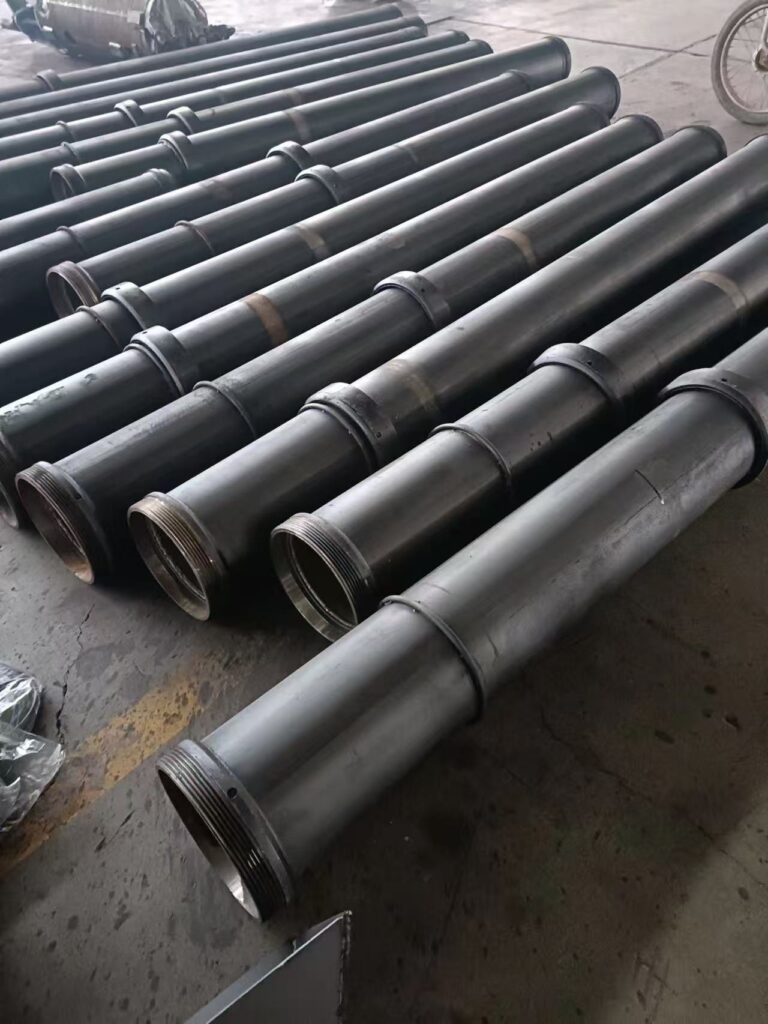
Tremie Pipe Sections
Tremie pipe sections are connected together to reach the required pile depth. Different connection methods, such as threaded joints, flange connections, and quick couplings, allow flexible assembly on site.
Main functions:
- Adjusting pipe length
- Easy installation and removal
- Suitable for different foundation depths
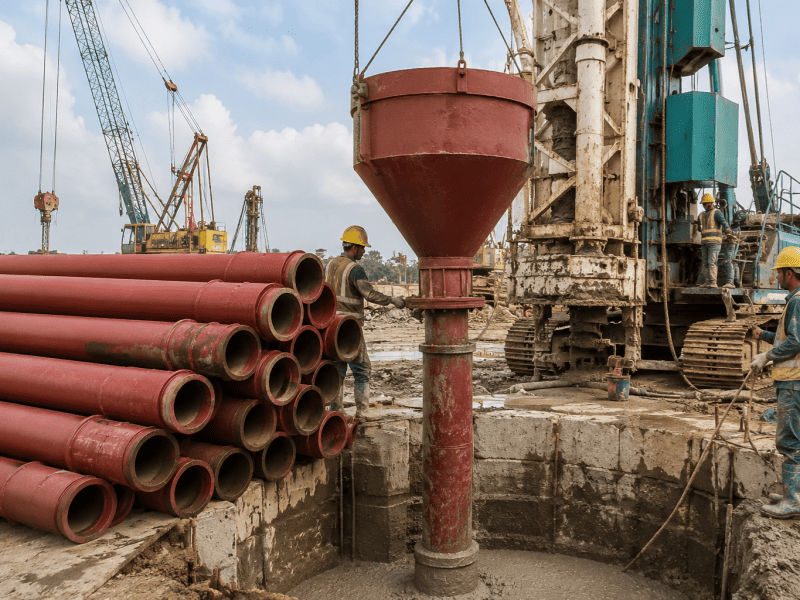
How Does a Tremie Pipe Work?
The tremie method uses a vertical pipe system to place concrete into deep foundations where direct pouring is not possible. It is commonly used in bored pile construction where the borehole contains water or drilling slurry.
After the reinforcement cage has been installed, the tremie pipe is lowered to the bottom of the borehole. The pipe outlet is positioned close to the pile base to ensure concrete can be placed from the bottom upward.
Fresh concrete is then poured through the hopper and flows down through the tremie pipe. The first batch of concrete reaches the bottom and gradually pushes drilling slurry or water upward as the pile is filled.
During the entire concrete placement process, the lower end of the tremie pipe must remain embedded in fresh concrete. This creates a continuous concrete seal that prevents slurry from entering the pipe and reduces the risk of contamination or concrete segregation.
As the concrete level rises, the tremie pipe is slowly lifted while maintaining sufficient embedment depth. Proper control of pipe movement and continuous concrete supply are essential to achieve a dense and high-quality concrete pile.
The tremie method helps ensure:
- Continuous concrete placement from the pile bottom upward
- Reduced risk of slurry contamination
- Better concrete consistency
- Improved foundation pile quality
This controlled placement process makes tremie pipes an important tool for deep foundation projects, especially bored piles constructed below groundwater level or with slurry-supported drilling methods.
Why Continuous Concrete Flow Matters
Interruptions during concrete placement can create construction problems.
Continuous flow helps prevent:
- Cold joints
- Concrete segregation
- Slurry contamination
- Air pockets
- Incomplete pile formation
If concrete placement stops for an extended period, the concrete inside the tremie pipe may begin to stiffen, increasing the risk of blockage.
For this reason, contractors usually prepare sufficient concrete supply before pouring begins.
Types of Tremie Pipes
Different projects require different pipe connection systems.Threaded Tremie Pipes
Threaded systems provide reliable connections and are widely used on medium-depth projects.
Advantages include:
- Strong joints
- Good sealing performance
- Low maintenance
Flanged Tremie Pipes
Flanged connections are commonly used on larger projects requiring higher structural strength.
They provide:
- Excellent stability
- High load capacity
- Reliable sealing
Assembly generally requires more time than threaded systems.
Quick Coupling Tremie Pipes
Quick coupling systems reduce installation time significantly.
They are suitable for projects where frequent assembly and disassembly are required.
Benefits include:
- Faster installation
- Reduced labor
- Improved construction efficiency
Standard Tremie Pipe Sizes
Pipe diameter is selected according to pile diameter and concrete volume.
Common outside diameters include:
| Pipe Diameter | Typical Application |
|---|---|
| 200 mm | Small bored piles |
| 250 mm | Medium foundations |
| 300 mm | Large diameter piles |
Individual pipe sections are commonly manufactured in lengths ranging from 0.5 m to 3.0 m, allowing contractors to assemble the required working length according to pile depth.
Choosing the Right Tremie Pipe
Several factors should be considered before selecting a tremie pipe system.
Pile Diameter
Larger piles generally require larger pipe diameters to maintain adequate concrete flow.
Concrete Slump
Concrete workability influences flow inside the pipe.
Concrete with insufficient slump may increase pumping resistance.
Pile Depth
Deeper foundations require additional pipe sections and stronger connection systems.
Proper planning helps reduce installation time on site.
Construction Equipment
The tremie pipe should match:
- Crane lifting capacity
- Concrete delivery method
- Reinforcement cage dimensions
Best Practices for Tremie Concrete Placement
Successful concrete placement depends on proper site operation.
Recommended practices include:
- Inspect all pipe connections before installation.
- Keep the tremie outlet embedded in fresh concrete throughout the pour.
- Maintain a continuous concrete supply.
- Monitor concrete volume during placement.
- Raise the tremie pipe gradually while maintaining the required embedment depth.
- Clean pipe sections immediately after use.
Following these practices helps improve pile quality and reduce construction risks.
Common Problems During Tremie Concrete Placement
Pipe Blockage
Possible causes include:
- Concrete with low workability
- Delayed concrete supply
- Hardened concrete inside the pipe
Concrete Segregation
Segregation may occur when:
- Concrete falls freely without proper tremie placement
- The pipe outlet rises above the concrete level
- Concrete consistency varies significantly
Slurry Contamination
If the tremie outlet loses contact with fresh concrete, drilling slurry can enter the pipe, reducing concrete quality.
Maintaining sufficient embedment depth is essential throughout the operation.
Tremie Pipe Maintenance and Storage
Proper maintenance extends equipment life and improves job site reliability.
After each project:
- Remove all concrete residue.
- Inspect pipe sections for deformation.
- Check threads, flanges, and seals.
- Replace damaged components.
- Store pipes on level supports to prevent bending.
- Apply corrosion protection when necessary.
Routine inspection reduces unexpected failures during future projects.
Frequently Asked Questions (FAQ)
A tremie pipe is used to place concrete into deep foundations, such as bored piles and diaphragm walls, where direct concrete pouring is not possible. It allows concrete to flow from the surface to the bottom of the borehole while reducing contamination from water or drilling slurry.
A tremie pipe keeps the discharge end below the surface of fresh concrete during placement. This continuous concrete seal prevents free-fall pouring, reduces mixing with slurry or water, and helps maintain consistent concrete quality throughout the pile.
A standard tremie pipe system consists of a lifting cap, hopper, tremie base pipe, and tremie pipe sections. The lifting cap is used for handling, the hopper receives concrete, the base pipe delivers concrete to the pile bottom, and pipe sections provide the required working length.
Common tremie pipe diameters include 200 mm, 250 mm, and 300 mm. The correct diameter depends on pile size, concrete flow requirements, construction depth, and project conditions.
Threaded tremie pipes provide strong connections and reliable sealing for general foundation projects. Flanged tremie pipes offer higher structural strength for larger projects, while quick coupling tremie pipes allow faster assembly and removal, improving efficiency on busy construction sites.