Choosing the right Continuous Flight Auger (CFA) is an important part of successful foundation drilling. A CFA auger may look like a simple drilling tool, but its flight design, tooth configuration, diameter, and overall construction can have a direct effect on drilling speed, spoil removal, tool life, and pile quality.
Ground conditions can also change significantly from one project to another. Soft clay, loose sand, gravel, weathered rock, and mixed ground do not respond to drilling in the same way. Using the same auger configuration for every formation can lead to slow penetration, excessive wear, or difficulty removing soil from the borehole.
For contractors and drilling operators, the practical question is not simply which CFA auger is available, but which auger configuration matches the ground being drilled.
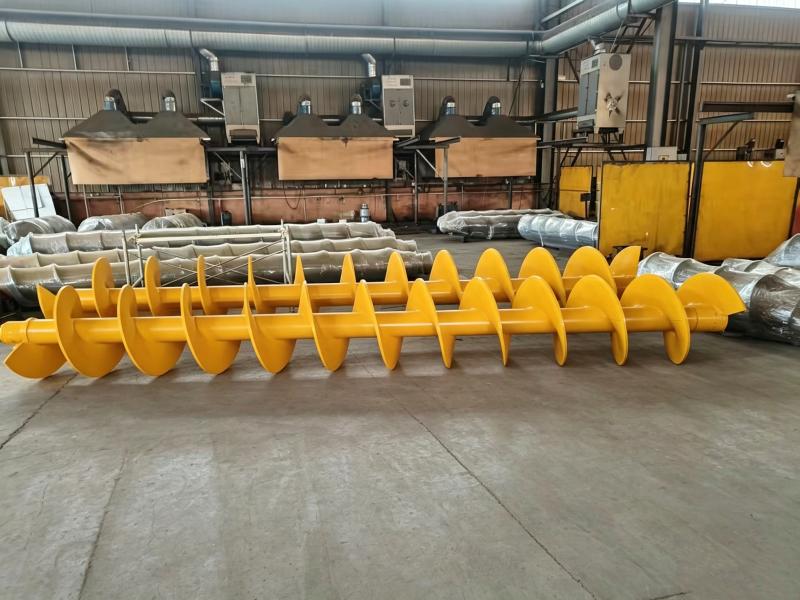
What Is a Continuous Flight Auger?
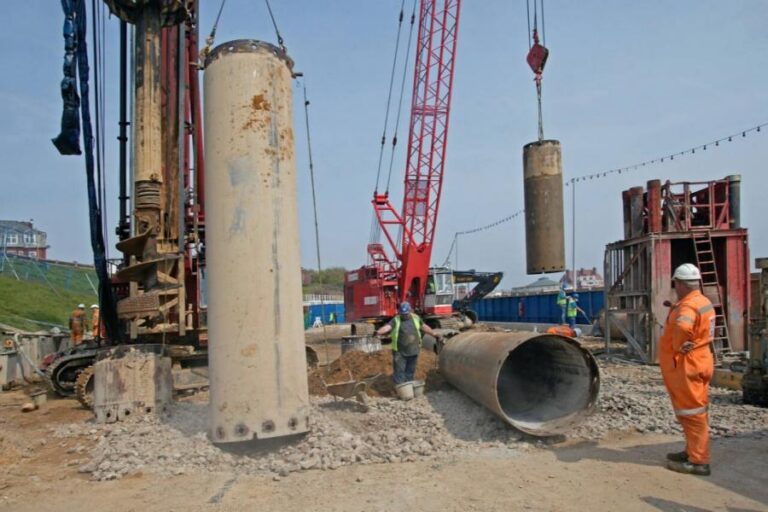
A Continuous Flight Auger is a helical drilling tool used to create continuous, relatively deep boreholes for foundation and piling applications. The auger consists of a central shaft with continuous flights running along its length. Cutting teeth are mounted around the lower section to break and loosen the soil.
As the auger rotates, the cutting teeth penetrate the ground while the flights transport the drilled material toward the surface.
One of the main advantages of CFA drilling is that excavation and spoil removal take place continuously. This makes the method suitable for many bored pile and foundation projects where efficient drilling and controlled excavation are required.
However, the auger should be selected according to the actual formation rather than only the required pile diameter.
Why Ground Conditions Matter
The ground has a major influence on how a CFA auger performs.
A tool designed for cohesive clay may not perform well in abrasive gravel. Likewise, an aggressive tooth configuration that works effectively in harder formations can be unnecessary when drilling through soft soil.
Several factors should be considered before selecting the auger:
- Soil hardness and strength
- Abrasiveness of the formation
- Presence of gravel or cobbles
- Moisture content
- Soil cohesion
- Required drilling diameter
- Required drilling depth
- Expected penetration rate
- Frequency of tooth replacement
- Drilling rig torque and crowd force
The objective is to achieve a balance between penetration, spoil removal, durability, and operating cost.
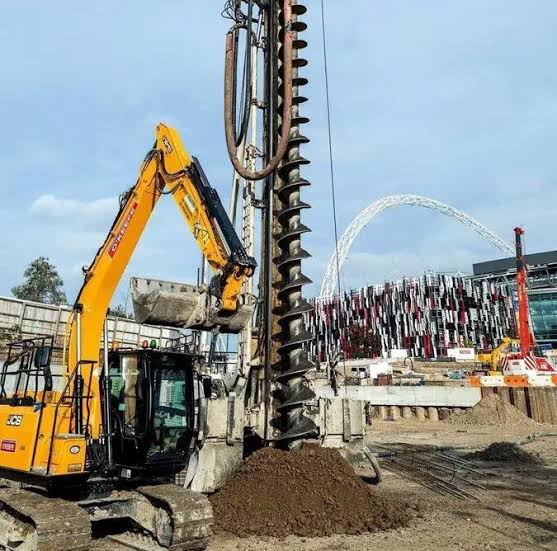
Choosing a CFA Auger for Soft Clay
Soft to medium clay is generally easier to penetrate than dense sand or gravel. However, clay can create another problem: it may stick to the flights and cutting teeth.
For cohesive clay, an auger with an appropriate flight pitch and effective soil-cutting geometry can help prevent excessive buildup.
A suitable configuration should provide:
- Efficient cutting of cohesive soil
- Good spoil transportation
- Reduced soil buildup around the flights
- Stable penetration
- Sufficient resistance to bending and torsional loads
In very sticky clay, operators should also pay attention to flight spacing and the ability of the auger to discharge excavated material efficiently.
Simply increasing drilling torque does not necessarily solve a clay-related problem. In many cases, improving the cutting and spoil-carrying configuration is more effective.
Continuous Flight Auger for Sand
Sand behaves differently from clay. Loose sand can flow easily into the borehole, while dense sand can require considerably more torque and cutting force.
For sandy formations, the CFA auger should be able to maintain continuous cutting without allowing excessive material to accumulate around the drilling head.
In dense sand, stronger cutting teeth and a robust lower auger section may be necessary.
Operators should also consider groundwater conditions. Saturated sand can behave differently from dry sand, particularly when drilling below the water table.
For these applications, drilling parameters such as rotation speed, crowd force, and extraction rate should be coordinated with the auger design.
Drilling Gravel and Coarse Soil
Gravel creates a more demanding environment for CFA drilling.
Loose gravel may move around the cutting teeth, while compact gravel can significantly increase the mechanical load on the drilling tool. Larger particles can also accelerate tooth and holder wear.
For gravelly ground, contractors generally need an auger with:
- Strong cutting teeth and holders
- Reinforced lower sections
- Good resistance to impact loading
- Adequate flight strength
- Effective spoil transportation
The tooth configuration is particularly important. Standard soil teeth may work in light gravel, but heavier or more wear-resistant cutting components may be required as particle size, density, and abrasiveness increase.
Before starting production drilling, it is useful to examine previous borehole records or conduct a test section when the ground conditions are uncertain.
CFA Augers for Mixed Ground Conditions
Mixed ground is often more difficult than a uniform soil layer.
A single borehole may pass through clay, sand, gravel, and weathered material at different depths. The drilling tool therefore needs to tolerate changing loads rather than being optimized for only one type of soil.
For these projects, durability and versatility become more important.
A practical approach is to select a general-purpose CFA configuration for the predominant formation and then adjust the cutting teeth when necessary.
For example, if most of the pile depth consists of clay and sand but a gravel layer occurs near the bottom, the auger can be configured for general soil drilling while using stronger cutting components in the areas exposed to higher wear.
This approach can be more practical than selecting an extremely aggressive configuration for the entire drilling depth.
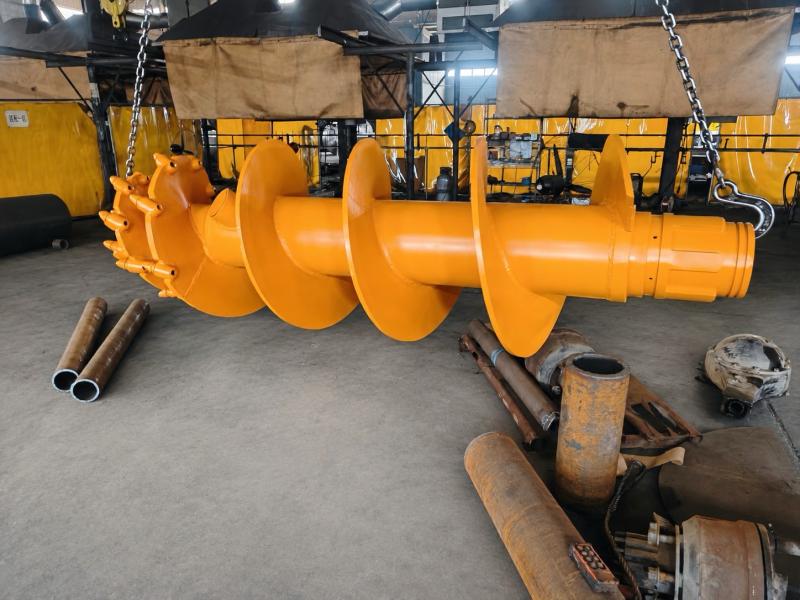
How Cutting Teeth Affect CFA Performance
The cutting teeth are among the most important wear components on a Continuous Flight Auger.
They directly contact the formation and are responsible for breaking and cutting the soil. Their shape, material, arrangement, and installation angle can all affect drilling performance.
For softer ground, soil teeth are commonly used because they provide efficient cutting with relatively low drilling resistance.
For harder or more abrasive formations, stronger wear-resistant teeth may be required.
The holder is equally important. A high-quality tooth will not perform properly if the holder becomes excessively worn or damaged.
For this reason, contractors should inspect both teeth and holders regularly rather than waiting until drilling performance has already dropped.
Matching Auger Diameter to the Project
Ground conditions are not the only consideration.
The required pile diameter must also be taken into account when selecting a CFA auger. The drilling diameter should correspond to the project design and the available drilling equipment.
Larger diameters generally increase the volume of soil being removed during each revolution. This can increase torque requirements and place greater loads on the auger shaft and flights.
For example, an auger designed for a large-diameter pile needs sufficient structural strength to withstand the combined effects of rotation, crowd force, and soil resistance.
The drilling rig should therefore be considered together with the auger. An auger that is mechanically suitable for a certain diameter may still be inefficient if the rig does not have enough torque or crowd force for the actual ground conditions.
Flight Design and Soil Removal
The flights do more than simply form the helical shape of the auger. They are responsible for carrying excavated material out of the borehole.
Flight pitch, thickness, and configuration can influence how efficiently soil is transported.
If the soil does not move smoothly along the flights, several problems can occur:
- Reduced drilling efficiency
- Increased torque
- Soil buildup
- Greater wear on the cutting section
- Difficulty maintaining a consistent drilling rate
The ideal configuration depends on the soil characteristics and drilling parameters.
For cohesive soils, preventing excessive sticking may be a priority. For granular soils, maintaining efficient spoil transportation can be more important.
What About Weathered Rock?
A standard CFA auger is primarily intended for soil and soil-like formations. When drilling encounters weathered rock or hard cemented layers, the requirements change.
Highly weathered formations may sometimes be handled with a reinforced auger and suitable cutting teeth, depending on their strength.
However, when the formation becomes too hard for efficient CFA drilling, continuing to force the same auger can result in excessive wear and low productivity.
In these conditions, contractors may need to consider alternative drilling tools such as rock augers, core barrels, or other specialized rock drilling equipment.
The key is to identify the transition between soil and rock before the project reaches full production.
Common CFA Selection Mistakes
Several mistakes are frequently made when selecting a Continuous Flight Auger.
Choosing the Tool Only by Diameter
Pile diameter is important, but it does not determine the correct cutting configuration.
Two projects with the same pile diameter can require completely different augers because the ground conditions are different.
Using the Same Teeth for Every Formation
Using the same tooth type for all ground conditions can reduce CFA performance and shorten tooth life. Tooth selection should match the formation and balance penetration, impact resistance, and wear resistance.
For soft clay and loose sand, BFZ70 provides efficient cutting. For stiff clay, dense sand, and mixed soil, BFZ72 offers a more balanced combination of cutting performance and durability.
For gravel and harder mixed ground, BFZ80 or C31HD bullet teeth provide improved impact and wear resistance. For weathered rock and harder formations, B47K17.5H, B47K19H, or B47K22H can be selected according to rock hardness and abrasiveness.
The correct choice is not simply the strongest tooth. Tooth geometry and carbide design should match the ground conditions to improve penetration and extend tooth life.
Ignoring Ground Changes with Depth
A borehole can contain several different soil layers. Selecting a tool based only on the surface soil can result in poor performance at deeper levels.
Focusing Only on Initial Cost
A cheaper auger may have a lower purchase price but generate higher operating costs if teeth wear quickly or drilling productivity is poor.
A better comparison should consider the total cost over the drilling operation.
Practical Selection Guide
The following approach can be used when selecting a CFA auger for a new project:
| Ground Condition | Main Requirement | Typical Consideration | Recommended Tooth |
|---|---|---|---|
| Soft clay | Easy cutting and spoil removal | Sharp and efficient soil-cutting configuration | BFZ70 |
| Stiff clay | Higher cutting resistance | Stronger teeth and holders | BFZ70 / BFZ72 |
| Loose sand | Efficient soil transportation | Suitable flight and cutting design | BFZ70 |
| Dense sand | Higher penetration force | Robust and wear-resistant cutting teeth | BFZ72 |
| Gravel | Impact and wear resistance | Reinforced cutting section | BFZ72 / BFZ80 / C31HD |
| Mixed soil | Versatility | General-purpose cutting configuration | BFZ72 / BFZ80 |
| Weathered rock | High wear and impact resistance | Rock-cutting teeth or reinforced configuration | BFZ80 / B47K17.5H |
| Soft to medium rock | Rock penetration and durability | Tungsten carbide bullet teeth | B47K17.5H / B47K19H |
| Hard rock | Maximum wear and impact resistance | Heavy-duty rock-cutting configuration | B47K19H / B47K22H |
This table should be treated as a starting point rather than a fixed selection rule. Actual tool selection should be based on the geotechnical report, drilling equipment, pile diameter, and expected operating conditions.
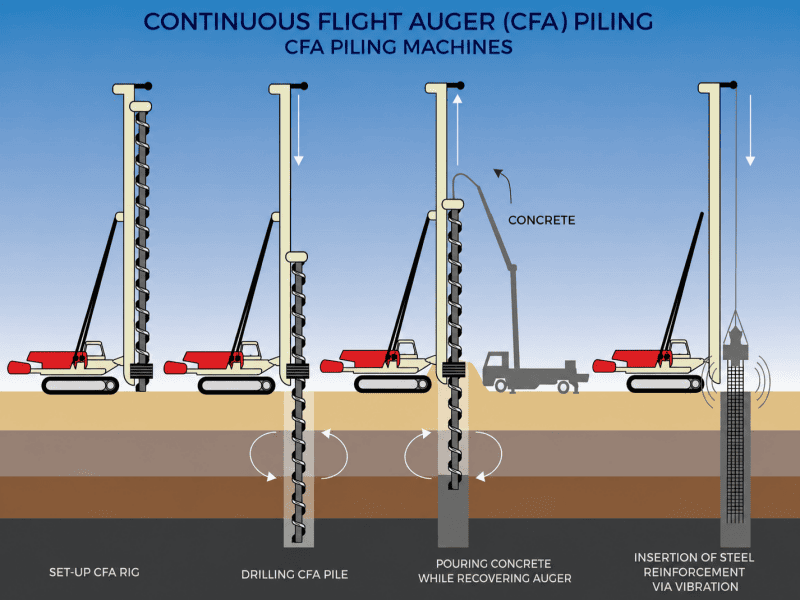
How to Improve CFA Drilling Performance
Even a well-designed auger can perform poorly if drilling parameters are not properly controlled.
Operators should monitor:
- Rotation speed
- Crowd force
- Drilling torque
- Penetration rate
- Auger extraction speed
- Soil discharge
- Tooth wear
- Changes in formation
If torque suddenly increases while penetration decreases, the operator should investigate the ground condition rather than simply increasing machine power.
Likewise, unusually fast penetration can indicate a softer layer and may require adjustment of rotation and crowd settings.
Keeping records of drilling torque, depth, and penetration rate can also help contractors identify changing ground conditions during production.
When Should the Teeth Be Replaced?
Wear is unavoidable during CFA drilling, particularly in gravelly or abrasive ground.
Signs that cutting teeth may need replacement include:
- Noticeable reduction in penetration rate
- Increased drilling torque
- Rounded or heavily worn cutting edges
- Damaged tooth tips
- Excessive wear on holders
- Uneven tooth wear around the drilling head
Replacing teeth before severe wear occurs can help protect the holders and maintain more consistent drilling performance.
For large projects, keeping replacement teeth and holders available on site can also reduce downtime.
Final Thoughts
There is no single Continuous Flight Auger configuration that is ideal for every foundation project.
The right choice depends on the relationship between the ground condition, pile diameter, drilling depth, rig capability, tooth configuration, and required productivity.
Soft clay may require a different approach from dense sand, while gravel and mixed formations can place much greater demands on teeth and holders. Understanding these differences before drilling begins can help contractors reduce wear, improve penetration, and avoid unnecessary downtime.
For Rockway, the most practical approach is to select the CFA auger based on the actual formation rather than relying on a standard configuration. Providing details such as pile diameter, drilling depth, soil type, and drilling rig model allows the auger and cutting components to be matched more accurately to the project.
Frequently Asked Questions(FAQ)
A Continuous Flight Auger (CFA) is used to drill continuous boreholes for bored piles and foundation construction. Its helical flights continuously transport excavated soil to the surface during drilling.
CFA auger selection should consider soil type, hardness, abrasiveness, pile diameter, drilling depth, and rig capability. Soft clay may require a soil-cutting configuration, while gravel and harder formations require more impact- and wear-resistant teeth.
Different ground conditions require different tooth configurations. BFZ70 is suitable for softer soil, BFZ72 for stiffer and mixed soil, while BFZ80 and C31HD can be considered for gravel and harder mixed ground. B47K17.5H, B47K19H, and B47K22H are more suitable for weathered and harder rock formations.
A reinforced CFA auger may handle some weathered or weak rock formations when equipped with suitable rock-cutting teeth. For harder rock, however, specialized tools such as rock augers or core barrels may provide better drilling performance and tool life.
Tooth replacement depends on ground abrasiveness, drilling conditions, operating parameters, and tooth wear. Signs such as reduced penetration, increased torque, rounded cutting edges, or damaged carbide tips indicate that the teeth should be inspected and potentially replaced.