
In rotary drilling construction, the Kelly bar is one of the key components responsible for connecting the drilling rig power system with the drilling tool. It transfers torque and vertical pressure generated by the rotary drive, allowing drilling tools to penetrate different soil and rock layers efficiently.
Although the Kelly bar is not a cutting tool itself, its performance directly affects drilling depth, torque transmission, and construction efficiency. A suitable Kelly bar design helps maintain stable drilling operations, especially in deep foundation projects where equipment reliability is critical.
Understanding the working principle, structure, and selection factors of Kelly bars helps contractors improve equipment performance and reduce operational issues during foundation drilling.
What Is a Kelly Bar?
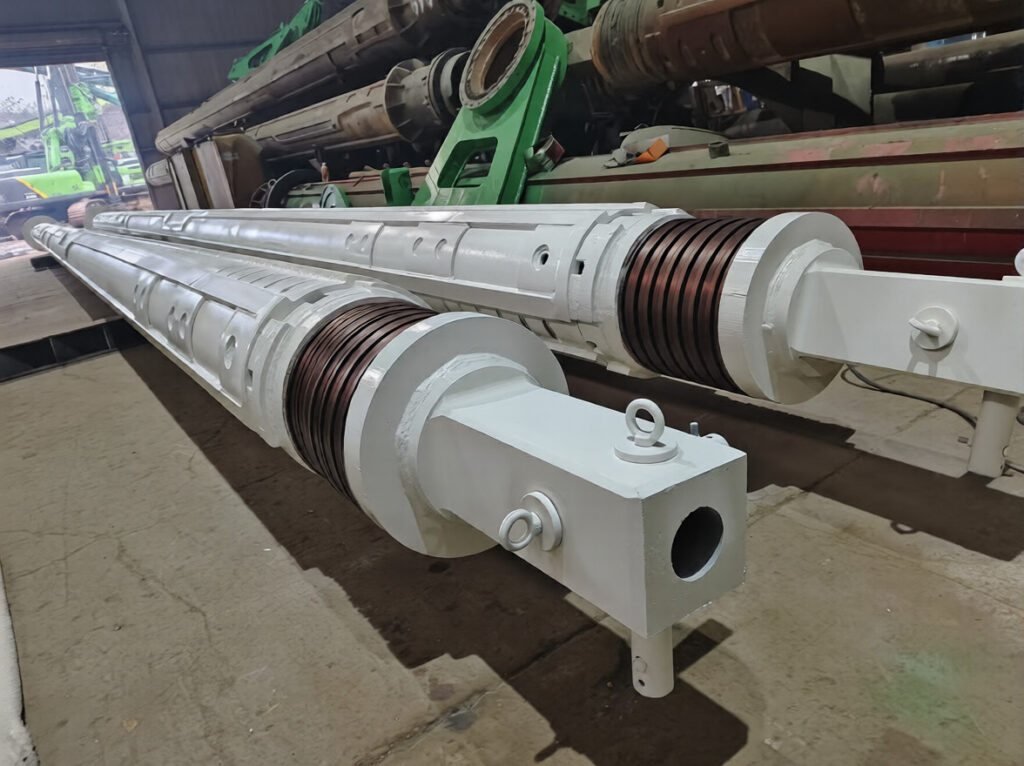
A Kelly bar is a telescopic drilling component installed between the rotary drive of a drilling rig and the drilling tool. Its primary function is to transmit rotational torque and downward pressure from the drilling rig to the attached drilling equipment.
Unlike traditional drill pipes, a Kelly bar consists of several nested steel sections that can extend and retract during drilling operations. This telescopic design allows rotary drilling rigs to achieve greater drilling depths without repeatedly adding or removing drill pipes.
During operation, the rotary drive rotates the Kelly bar while the connected drilling tool cuts through soil, gravel, or rock formations. The Kelly bar also transfers the pushing force required for efficient penetration and maintains stability during the drilling process.
A typical Kelly bar must withstand several working forces:
- Rotational torque from the rotary drive
- Vertical compression during drilling
- Tensile force during lifting operations
- Repeated impact loads caused by changing ground conditions
Because of these demanding conditions, Kelly bars require high-strength materials, accurate manufacturing, and proper surface treatment to maintain long-term performance.
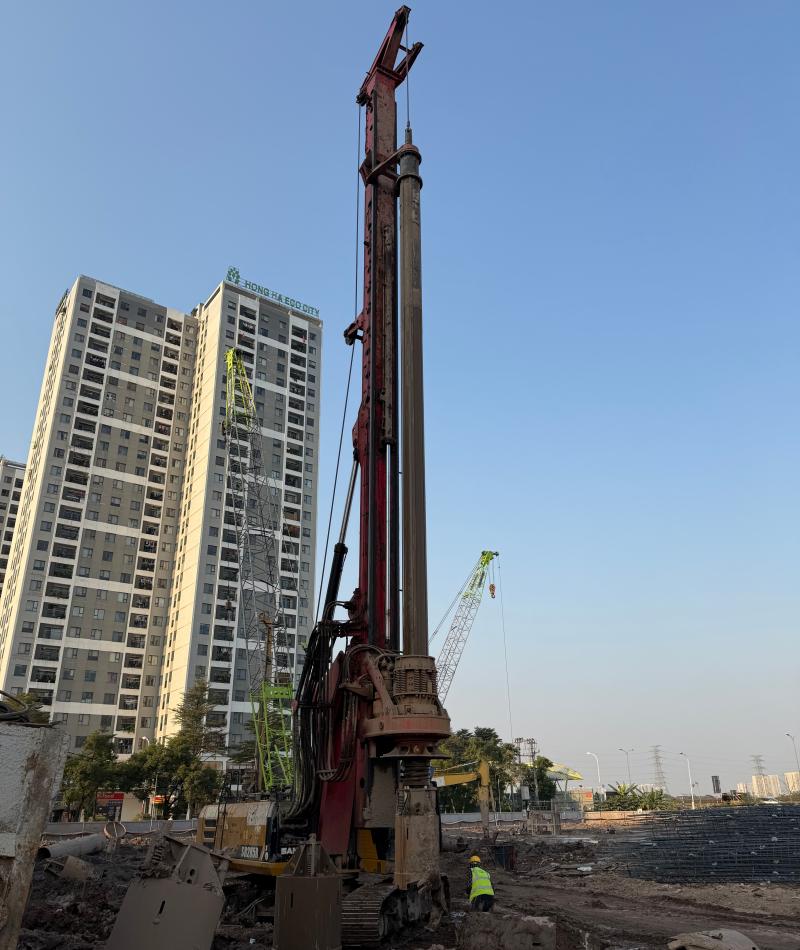
How Does a Kelly Bar Work in Rotary Drilling?
The working process of a Kelly bar involves coordinated movement between the rotary drive, telescopic sections, and drilling tool.
When drilling begins, the rotary drive grips the upper section of the Kelly bar and generates rotational movement. The torque is transferred through the drive keys or locking mechanisms between each section until it reaches the drilling tool at the bottom.
As the drilling tool enters the ground, the Kelly bar extends gradually to maintain contact between the rotary drive and the drilling attachment. Once the required depth is reached, the drilling tool is lifted together with the Kelly bar to remove excavated material.
The main working functions include:
Torque Transmission
The Kelly bar transfers rotational power from the drilling rig to the cutting tool. Efficient torque transmission allows the drilling tool to overcome soil resistance and improve penetration performance.
Depth Extension
The telescopic structure allows the drilling rig to complete deeper holes while maintaining a compact working height during transportation and operation.
Load Transfer
During drilling and lifting, the Kelly bar carries significant vertical loads. A strong structure helps prevent deformation and ensures stable operation.
Main Components of a Kelly Bar
A Kelly bar consists of several important components that work together to provide strength, flexibility, and reliable power transmission.
Telescopic Sections
The main body of a Kelly bar is composed of multiple steel sections fitted inside each other. Depending on the required drilling depth, Kelly bars may include three, four, five, or more sections.
Each section moves vertically during extension and retraction. The design of these sections determines the maximum drilling depth and the overall working efficiency of the drilling rig.
Drive Keys
Drive keys are located along the contact surfaces between Kelly bar sections. They are responsible for transferring torque from one section to another.
Since drive keys experience continuous friction and heavy loads, wear resistance is an important factor affecting Kelly bar service life.
Kelly Box and Adapter
The Kelly box connects the Kelly bar with drilling tools such as drilling buckets, core barrels, and rock augers.
The adapter ensures secure connection and transfers both torque and vertical force to the drilling attachment.
Locking Mechanism
The locking mechanism allows sections of an interlocking Kelly bar to engage during drilling.
A reliable locking system improves torque capacity and allows the Kelly bar to operate under higher drilling resistance.
Wear Protection Parts
Wear protection components reduce damage caused by friction, soil particles, and repeated operation.
Regular inspection of these areas helps maintain stable performance and prevents unexpected downtime.
Main Types of A Kelly Bar
Kelly bars are mainly classified according to their torque transmission method and structural design.
Friction Kelly Bar
A friction Kelly bar transfers torque through friction between the drive keys of each section.
The sections slide together during extension and rely on surface contact to transmit rotational force.
Advantages include:
- Smooth operation
- Simple structure
- Lower maintenance requirements
- Suitable for general drilling applications
Friction Kelly bars are commonly used for projects involving clay, sand, and medium-density soil conditions.
However, because torque transmission depends on friction contact, they may not be suitable for extremely hard rock drilling or applications requiring very high torque.
Interlocking Kelly Bar
An interlocking Kelly bar uses mechanical locking between sections to provide stronger torque transmission.
When each section engages, the locking system creates a direct connection that allows the Kelly bar to handle higher loads.
Advantages include:
- Higher torque capacity
- Better performance in hard formations
- Improved drilling stability
- Suitable for deep foundation projects
Interlocking Kelly bars are often selected for large diameter bored piles, bridge construction, and projects with challenging geological conditions.
Friction Kelly Bar vs Interlocking Kelly Bar
Selecting the right Kelly bar is essential for maximizing drilling efficiency, equipment performance, and project profitability. While both friction Kelly bars and interlocking Kelly bars are widely used in rotary drilling, they differ significantly in torque capacity, drilling depth, and suitable ground conditions. The comparison below highlights their key differences to help you choose the best option for your foundation drilling project.
| Feature | Friction Kelly Bar | Interlocking Kelly Bar |
|---|---|---|
| Torque Transfer | By friction contact | By mechanical locking |
| Torque Capacity | Medium | High |
| Structure | Simple design | Strong locking system |
| Performance | Smooth operation | Better for heavy-duty drilling |
| Soil Conditions | Clay, sand, normal soil | Hard rock, mixed ground |
| Applications | General foundation projects | Deep piles, bridges, large diameter piles |
| Advantage | Low maintenance and cost-effective | Higher strength and drilling stability |
Special Kelly Bar Designs
Some construction environments require specially designed Kelly bars.
High Torque Kelly Bar
Designed for drilling rigs with high torque output, these Kelly bars feature reinforced structures for demanding soil and rock conditions.
Full Locking Kelly Bar
A full locking Kelly bar consists of multiple telescopic sections with locking mechanisms on each section. As the bar extends, every section locks securely with the adjacent one, creating a rigid drilling assembly capable of handling high drilling loads and difficult ground conditions.
Low Headroom Kelly Bar
Designed for restricted working areas, low headroom Kelly bars are suitable for underground construction and urban projects where vertical space is limited.
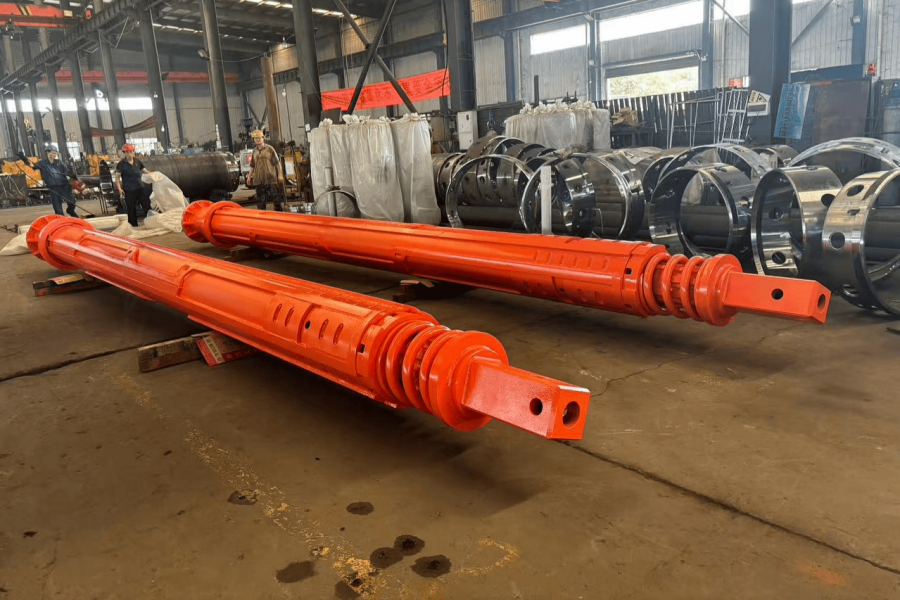
Applications of Kelly Bars in Foundation Construction
Kelly bars are widely used in different foundation drilling applications.
Bored Pile Construction
In bored pile projects, Kelly bars provide the necessary torque and force to operate drilling buckets and other tools for creating deep foundation holes.
Bridge Foundation Projects
Large bridge foundations often require deep and stable piles. Kelly bars with high torque capability help drilling rigs handle difficult ground conditions.
High-Rise Building Foundations
Urban construction projects require reliable drilling equipment to create strong foundations while maintaining efficiency in limited spaces.
Diaphragm Wall Construction
Certain diaphragm wall applications also use specialized drilling systems where Kelly bar performance affects excavation accuracy and stability.
Factors to Consider When Choosing a Kelly Bar
Selecting the correct Kelly bar requires consideration of several project requirements.
Drilling Rig Specifications
The Kelly bar should match the drilling rig’s:
- Torque output
- Rotary drive size
- Lifting capacity
- Maximum drilling depth
An unsuitable Kelly bar may reduce drilling efficiency and increase equipment wear.
Ground Conditions
Different geological conditions require different Kelly bar designs.
Soft soil applications may use standard friction systems, while rock drilling often requires stronger interlocking designs.
Drilling Depth
The required pile depth determines the number of Kelly bar sections and overall length.
Longer Kelly bars provide greater drilling depth but may require stronger lifting systems.
Drilling Tools
The selected drilling bucket, core barrel, or rock auger also affects Kelly bar requirements because different tools generate different levels of resistance.
Kelly Bar Maintenance and Inspection
Regular maintenance helps extend Kelly bar service life and maintain drilling performance.
Recommended maintenance practices include:
- Checking drive key wear regularly
- Cleaning soil and debris from contact surfaces
- Inspecting locking mechanisms
- Applying suitable lubrication
- Checking for deformation or cracks
Operators should monitor abnormal noise, difficult extension movement, or reduced torque transmission, as these may indicate wear or damage.
Importance of The Kelly Bar in Modern Foundation Drilling
Kelly bars remain an essential connection between rotary drilling rigs and drilling tools. Their ability to transfer torque, handle heavy loads, and achieve deep drilling makes them a critical component in modern foundation construction.
Choosing the correct Kelly bar type according to drilling conditions, equipment specifications, and project requirements helps improve construction efficiency and reduce maintenance costs.
With proper selection, operation, and maintenance, a high-quality Kelly bar can provide stable performance throughout demanding foundation drilling projects.
Frequently Asked Questions (FAQ)
A Kelly bar is a telescopic drilling component that transfers torque and downward force from the rotary drilling rig to the drilling tool. It helps achieve deep drilling while maintaining stable operation during foundation construction.
The two main types of Kelly bars are friction Kelly bars and interlocking Kelly bars. Friction Kelly bars are suitable for normal soil conditions, while interlocking Kelly bars are designed for high torque applications and difficult geological conditions.
A friction Kelly bar transfers torque through friction between sections, providing smooth operation and lower maintenance. An interlocking Kelly bar uses a mechanical locking system to achieve higher torque capacity and better performance in hard ground conditions.
The Kelly bar should match the drilling rig’s torque output, rotary drive size, lifting capacity, drilling depth, and ground conditions. The drilling tools used, such as drilling buckets or core barrels, should also be considered.
Regular inspection and maintenance can extend Kelly bar life. Operators should check drive key wear, clean contact surfaces, inspect locking systems, apply proper lubrication, and monitor for cracks or deformation during operation.